
André Kertész [1894 – 1985] was a Hungarian-born photographer renowned for his groundbreaking contributions to photographic composition and the photo essay.
His work, characterized by its lyrical sensibility, poetic vision, and mastery of light and shadow, captured the essence of everyday life with a profound sense of humanity. Kertész’s early career was marked by his innovative use of unorthodox camera angles and framing, techniques that challenged the conventions of traditional photography.
His photographs, often infused with a sense of humor and irony, captured the fleeting moments of life in the streets and cafes of Paris and New York City, where he spent most of his career. Kertész’s work gained recognition for its humanist approach and its ability to convey the beauty and poetry of the ordinary.
He is considered one of the most influential photographers of the 20th century, and his work continues to inspire and captivate audiences worldwide.
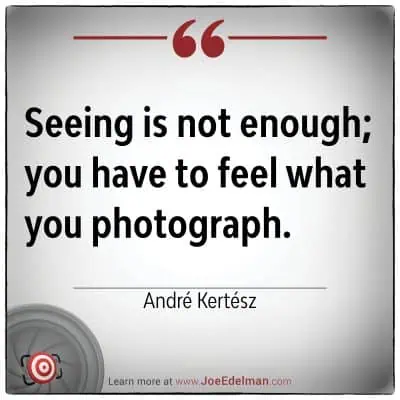
Photography Quotes From André Kertész


📸 Did you know?
André Kertész was a pioneer in the use of candid photography.
Videos about André Kertész
📸 Did you know?
André Kertész’s work was initially overlooked during his lifetime, but he gained recognition later in his career.
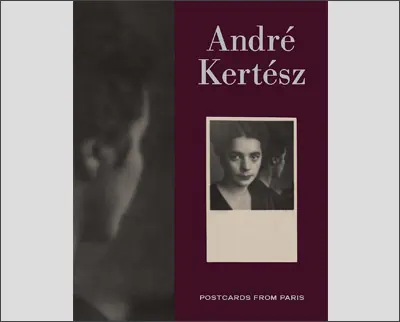
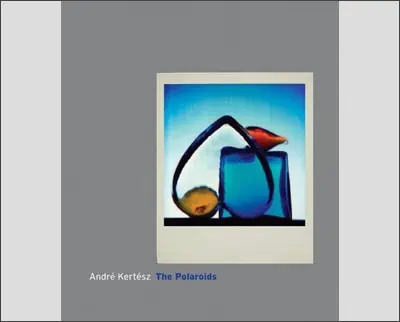
Photography Books: André Kertész
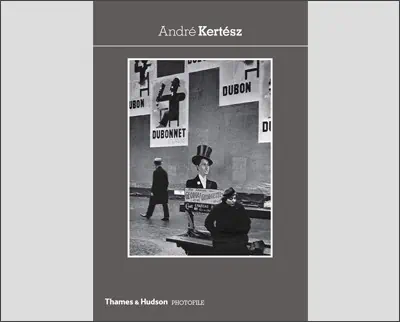
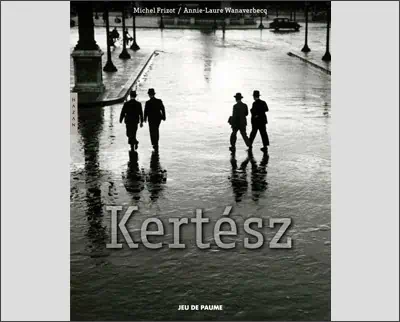
📸 Did you know?
André Kertész was once a professional stockbroker.
Biography of André Kertész
Early Life and Formative Years
André Kertész, born Andor Kertész on July 2, 1894, in Budapest, Hungary, was destined to become one of the seminal figures in the history of photography. Raised in a middle-class Jewish family, Kertész’s early life was shaped by the cultural vibrancy of Budapest. His initial encounter with photography was at the age of 16 when he was gifted a camera, marking the start of a lifelong passion.
Military Service and Early Work
Kertész’s early photography was interrupted by World War I. He served in the Austro-Hungarian army, where he utilized his camera to document life in the trenches, capturing the daily existence of soldiers with a poignant and humanistic approach. These images, marked by their honesty and simplicity, laid the groundwork for his later style.
Move to Paris and Artistic Development
After the war, Kertész moved to Paris in 1925, a decision that would profoundly influence his career. Paris in the 1920s was a melting pot of artistic innovation, and Kertész, immersing himself in this environment, began to develop his unique photographic style. He became a central figure in the avant-garde circles, mingling with artists like Piet Mondrian and Marc Chagall. His work from this period is characterized by a poetic approach to everyday scenes, innovative compositions, and a deep understanding of light and shadow.
Contribution to Photojournalism
Kertész’s time in Paris coincided with the rise of photojournalism. He worked for various publications, including the influential magazine “Vu.” His work during this time was pioneering in the field of photojournalism, as he captured candid moments with a sensitivity and intimacy that was uncommon in the press photography of that era.
Innovative Techniques and Themes
Kertész is noted for his use of unconventional perspectives and his ability to discover beauty in mundane settings. His compositions often played with geometry and form, transforming ordinary scenes into visually compelling images. One of his most famous works from this period is “Meudon,” which showcases his mastery of composition and perspective.
Relocation to the United States
In 1936, Kertész and his wife, Elizabeth, moved to New York City, a move that would present new challenges and opportunities. Initially, he struggled to find work that matched his artistic aspirations. The commercial environment of American photography was in stark contrast to the artistic circles he had been part of in Paris.
Despite these challenges, Kertész continued to photograph, turning his lens towards the architecture, streets, and people of New York. His American body of work, while different in tone from his Parisian photographs, still displayed his signature style of finding the extraordinary in the ordinary.
Later Career and Recognition
It wasn’t until the 1960s and 1970s that Kertész’s work began to receive significant recognition in the United States. He was given solo exhibitions at major institutions such as the Museum of Modern Art in New York. These later years saw a resurgence of interest in his earlier work, and Kertész was celebrated as a pioneer of photographic composition and a master of the candid moment.
Personal Life and Legacy
Throughout his life, Kertész remained dedicated to his artistic vision, often at the expense of commercial success. He was a private individual, and his photography offered a window into his soul, reflecting his feelings of displacement and nostalgia, especially in his later years.
André Kertész passed away on September 28, 1985, in New York City. His legacy endures as one of the true innovators in photography, a photographer who could capture the poetic and lyrical in everyday life. His influence can be seen in the works of subsequent generations of photographers who continue to draw inspiration from his ability to see the world through a unique and profoundly personal lens.