

Table of Contents
The Role of Catchlights in Portrait Photography
In portrait photography, lighting is everything. It shapes the subject, defines the mood, and ultimately determines the impact of the final image. One of the most overlooked yet essential aspects of lighting is catchlights—the small but powerful reflections of light in a subject’s eyes. These tiny details can bring a portrait to life, adding a sense of depth, vibrance, and connection to the viewer. Understanding how to create and control catchlights is a skill every portrait photographer should master.
Understanding Catchlights
Definition and Significance
Catchlights are the reflections of light sources in a subject’s eyes. They can appear as small highlights, circular reflections, or even distinct shapes depending on the type of lighting used. While seemingly minor, catchlights are crucial in giving eyes a sense of dimension and liveliness. Without them, the eyes can appear dull or lifeless, diminishing the overall impact of a portrait.
Impact on Portraits
A well-placed catchlight adds energy and personality to a subject. It enhances the illusion of depth, making the subject’s eyes look more expressive and engaging. Catchlights also provide context for the lighting environment, subtly informing the viewer about the direction and quality of the light source. Whether natural or artificial, the presence of catchlights helps to create a more compelling portrait.

The Science
We know that by the time we are between 5 to 7 months old, we learn to expect that light comes from above – that’s why when you walk into a room – the lights are on the ceiling and not the floor. Also, as infants seeing these light sources for the first time – we are seeing small round-point light sources
Psychologists have long known that, as humans, we use our eyes to communicate our feelings and our interest. Research has shown that the white part of the eye, the sclera, is also implicated in judgments of attractiveness and health. That is why portrait photographers usually retouch and lighten the whites of the eyes.
Research has also shown that darker limbal rings make a face seem healthier. What’s a limbal ring? It’s the dark outer ring around the colored iris. Most people have them – but not everyone, and if you have darker eyes, they are probably harder to spot. This is why many photographers use dodge and burn techniques or create actions to lighten, sharpen, or even replace the eye’s iris.
Psychologists consider pupil dilation to be a cue to sexual or social interest. That’s because pupil size isn’t under your voluntary control. Bigger pupils = more interest.
Creating Natural-Looking Catchlights
Preferred Shapes and Positions
While catchlights can take many forms, most portrait photographers prefer round or slightly oval reflections, as these mimic the natural way light reflects off the human eye. The positioning of the catchlight is equally important. Ideally, it should be placed in the upper portion of the iris, typically at the 10 o’clock or 2 o’clock position. This placement mimics the way sunlight naturally hits the eye and creates the most pleasing effect.
The physics of Catchlights
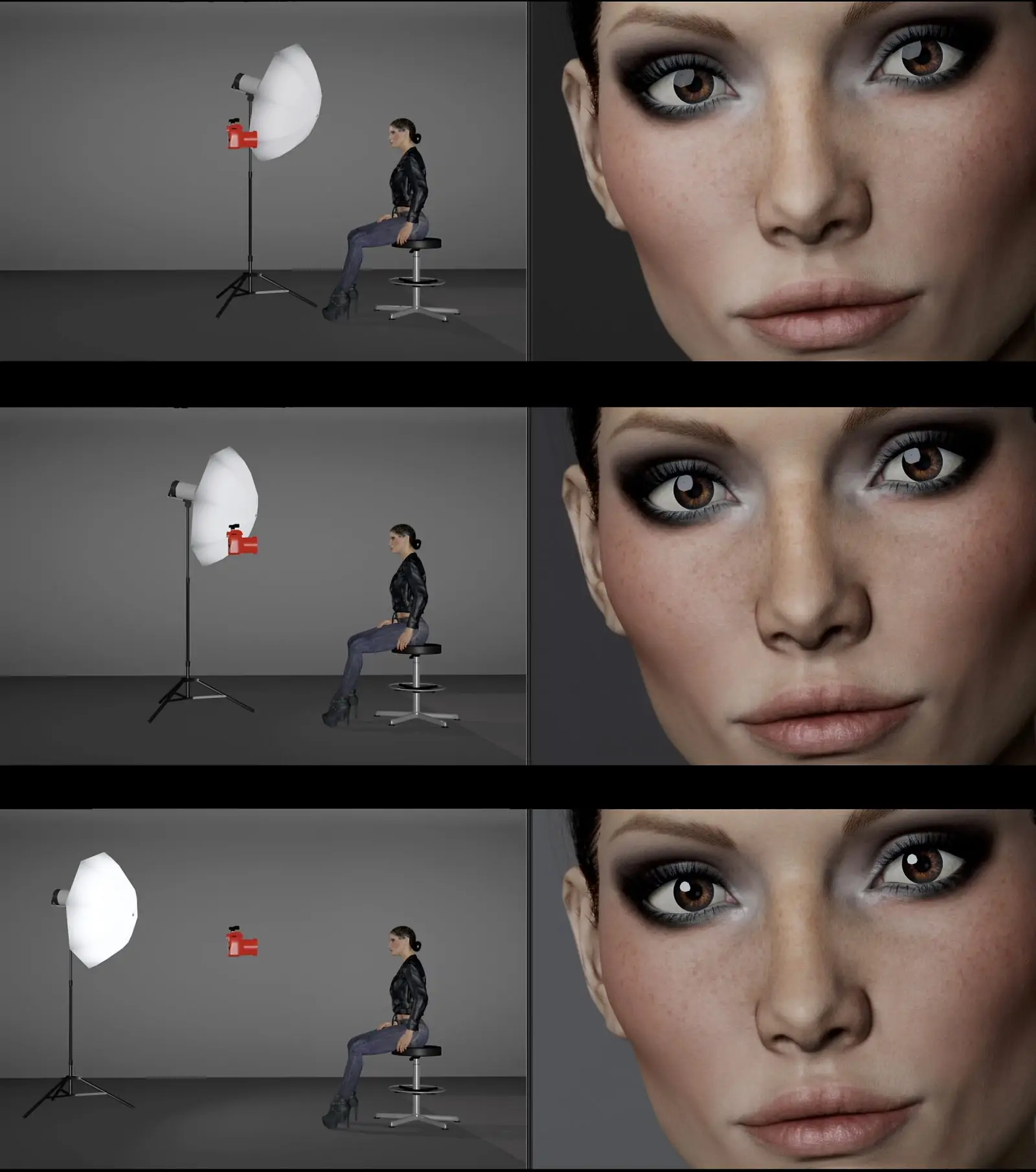
Lighting Techniques for Desired Effects
The shape and size of a catchlight depend on the light source. A small LED light will create a pinpoint catchlight, while a large softbox will produce a broader, softer reflection. Experimenting with different lighting setups, including off-camera flashes, window light, and studio strobes, allows photographers to control the appearance of catchlights and achieve a specific artistic vision.
Lighting Techniques to Achieve Catchlights
Using Softboxes and Umbrellas
Softboxes and umbrellas are excellent tools for creating smooth, natural-looking catchlights. Because these modifiers diffuse light evenly, they produce soft, rounded reflections in the subject’s eyes. Larger softboxes will create more prominent catchlights, which can add a dramatic touch to the portrait.
Employing Reflectors
Reflectors are a simple yet effective way to introduce catchlights, especially when shooting in natural light. Positioning a silver or white reflector below the subject’s face can help bounce light into the eyes, creating a secondary catchlight that enhances brightness and detail.
Utilizing Ring Lights
Ring lights produce a distinctive circular catchlight that is especially popular in beauty and fashion photography. While this type of catchlight may not be ideal for all styles, it can add a modern and stylish touch to close-up portraits. The even, shadowless illumination of a ring light also enhances facial features, making it a favorite among makeup artists and beauty photographers.
Artistic Considerations
Creative Uses of Catchlights
While traditional catchlights add realism and warmth to a portrait, creative photographers sometimes use them as an artistic element. Experimenting with multiple light sources, unusual reflector placements, or even custom-shaped modifiers (such as heart-shaped or star-shaped cutouts) can result in unique and eye-catching portraits.
Avoiding Distracting Reflections
Although catchlights are generally beneficial, they can sometimes be distracting if not controlled properly. Overly large catchlights or multiple reflections in the eyes can detract from the natural look of the portrait. A simple adjustment of the light source or the angle of the subject can often correct these issues.
Common Mistakes and How to Avoid Them
Overly Large or Multiple Catchlights
A common mistake among beginners is using too many light sources that create multiple catchlights. While multiple catchlights can sometimes add an artistic touch, they often result in a cluttered or unnatural appearance. Keeping the light source simple and well-positioned ensures a clean and natural effect.
Unnatural Positions
Catchlights should be positioned naturally within the eyes. If the reflections appear too low or off to the side, they can make the subject look eerie or unnatural. Always check the placement before finalizing a shot to maintain a balanced and aesthetically pleasing composition.
Historical and Psychological Impact
The Evolution of Catchlights in Photography
Historically, portrait painters and early photographers understood the importance of light in the eyes. Classic Renaissance paintings often featured small highlights in the eyes to create depth and realism. In photography, early portraitists relied on large north-facing windows to achieve soft, flattering light and natural catchlights.
As artificial lighting technology evolved, photographers gained greater control over catchlight placement and intensity.
How Catchlights Affect Viewer Perception
Psychologically, catchlights play a crucial role in how viewers perceive a portrait. Bright, well-placed catchlights make a subject appear lively, friendly, and engaging. Conversely, portraits without catchlights may make the subject seem distant, sad, or unapproachable. Understanding this impact allows photographers to create images that evoke the desired emotional response from their audience.
Technical Tips for Perfect Catchlights
Camera Settings
To ensure crisp and defined catchlights, photographers should pay attention to their camera settings. Using a slightly narrower aperture (e.g., f/4 to f/8) can help maintain sharpness, while keeping the ISO low minimizes noise. A well-balanced exposure ensures that the catchlights are bright but not overexposed.
Enhancing Catchlights in Post-Processing
For photographers who want to refine or enhance catchlights, post-processing software like Adobe Photoshop or Lightroom can be a valuable tool. Techniques such as selective brightening, dodging, and even manually adding subtle catchlights can help refine the final image. However, it’s essential to maintain a natural look—overly edited catchlights can appear artificial and distracting.
The Last Frame: Enhancing Portraits with Thoughtful Catchlight Application
Mastering the art of catchlights is a subtle yet powerful way to elevate portrait photography. By understanding how light interacts with the eyes and employing various lighting techniques, photographers can create images that are engaging, expressive, and full of life.
Whether using natural light, reflectors, or studio strobes, the careful application of catchlights will make portraits more compelling and visually appealing. Paying attention to this small but essential detail ensures that every portrait captures not just a likeness but a sense of personality and presence.
I have previously made two different videos with tips and suggestions for dealing with eyes when photographing portraits: Portrait Photography – Why I Shoot For The EYES! and It’s All About The Eyes
I also made this video about How to find the “good side” of a person’s face for a Portrait? which explains how eye size determines the best side.