Table of Contents
Concert Photography
The first concert I ever photographed was Hall and Oates performing at John Oates and my alma mater – North Penn High School. Well, it wasn’t my alma mater yet, I was a freshman at the time.
That experience left me hooked. Over the years, I have photographed Hall and Oates numerous times. I had the good fortune to photograph some classics like Meatloaf, Van Halen, and Journey and Alabama.
That leads me to my experience with Kenny Rogers. I didn’t have the opportunity to photograph him, but I did get to talk shop with him. Photography, that is – not country music.
The Unexpected Invitation
One of the great bonuses to my photography career has been the people I have had the opportunity to meet, spend time with, and learn about their lives and experiences.
In late 2015, I received an email from Randy Dorman, who explained that he was the lead guitarist for the Kenny Rogers band. They would perform a Christmas show in Valley Forge, Pennsylvania in a few weeks
He had been following my YouTube videos and asked if I would like to come to the show, meet Kenny, and talk about photography for a bit.
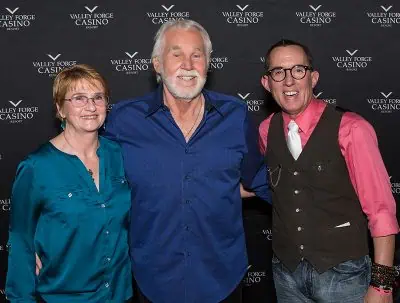
Meeting Kenny Rogers
After a few emails back and forth, my wife and I spent an afternoon with Randy, taking photographs around Valley Forge Park and then sitting and talking to Kenny Rogers for well over an hour before the show.
You may not be aware that Kenny Rogers was an accomplished photographer, having published several books on his photography, most notably his celebrity portraits.
Rogers was a lifelong fan of photography, but in the 1980s, he began taking portfolio pictures for his then-wife, model Marianne Gordon. He studied with the well-known landscape photographer John Sexton, who had worked as an assistant to Ansel Adams and Yousuf Karsh.
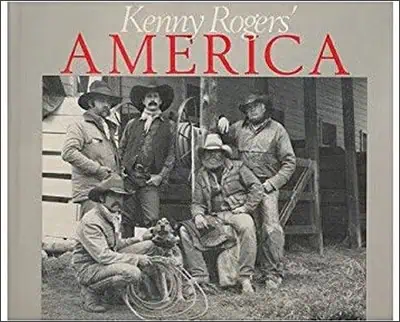
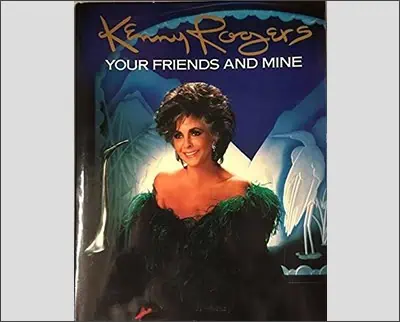
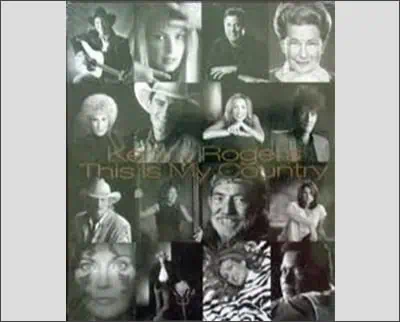
Links to books are Amazon Affiliate Links, which help to support this website without any additional cost to you.
Rogers documented a tour of US Landmarks with his large-format camera in the mid-1980s, and those images became the book Kenny Rogers’ America, published in 1986. In 1987, he published a collection of celebrity portraits, including those of Elizabeth Taylor and Lucille Ball.
His third and final book, This is My Country, comprised portraits he shot of country music stars backstage at the 2004 Academy of Country Music Awards.
Rogers used Olympus and Nikon cameras when he wasn’t shooting a large format.
Spending time with Kenny Rogers made it abundantly clear why the man had such a long and successful career. He was terrific, and talking photography with one of the greatest country music artists of all time was surreal.
Staying Connected Over the Years
I stayed in touch with Randy over the years, catching up with him at Imaging USA in Nashville and visiting him and his wife at home.
A New Opportunity in 2025
Fast-forward to 2025. Since Kenny Rogers passed away in March 2020, his band has stayed together. They have been touring with a show called Through The Years with the Kenny Rogers Band, with Don Gatlin taking the lead on Kenny Rogers’ iconic music.
Don actually wrote a few songs for Kenny Rogers and it is really cool hearing these classic songs performed by the artists who performed them for decades right behind Kenny Rogers.
In March 2025, they visited my area to play at the Schaeffer Auditorium on the Kutztown University campus, just 20 minutes from my home. Randy again invited me to the show and to visit for a while beforehand.
Planning for Concert Photography
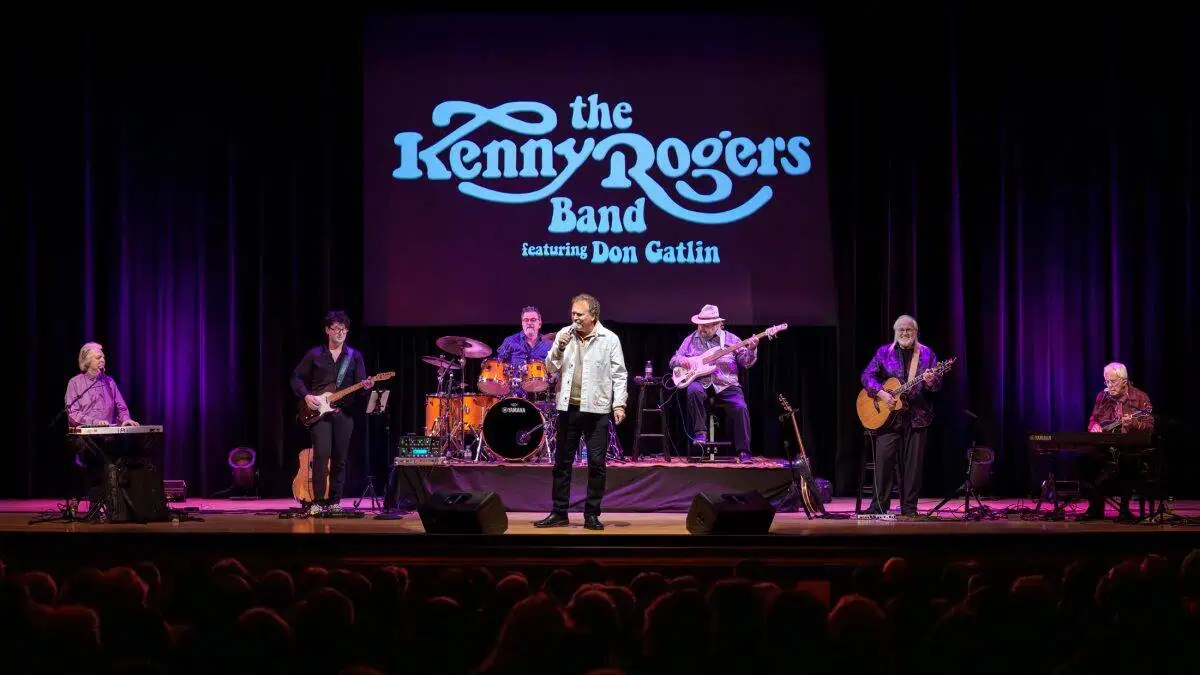
Since this was a smaller venue, I thought there might be an opportunity to photograph the band. So, I started with Kutztown’s website and was able to find some photos and a video of the recent renovation of the theatre. I could easily photograph from the back and sides without distracting audience members, so I asked him if I could shoot some images for the band to use in their marketing.
I have never met a musician who doesn’t appreciate good photos of their performances, so Randy checked with the rest of the band and ensured the university didn’t have a problem with it, and I was good to go.
Choosing the Right Gear
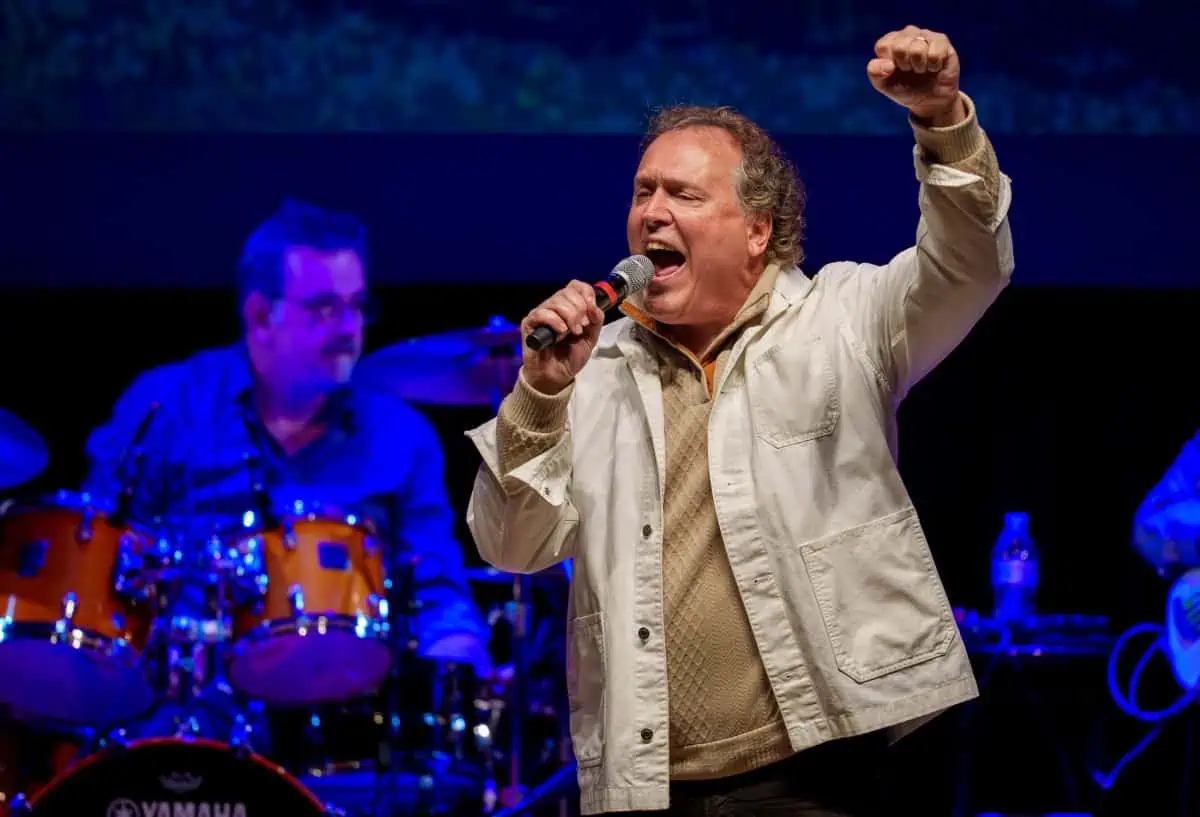
My research showed me that this is an 800-seat theater that was modernized in 2012. It has a lot of space behind the audience and on the sides, so I realized that if I shot with a 300mm F2.8 on a monopod and a 70-200mm F2.8, I could get an excellent variety of images, including detailed close-ups of the band members. I also used a 50mm and a 24mm, both F1.4.
I would shoot with my Sony A1 cameras in electronic shutter mode. I initially intended to turn off all sound and use only the visual indicators in the viewfinder. Still, when the show started, I realized I could use the quiet shutter sounds without anyone hearing them.
Exclusive Backstage Access
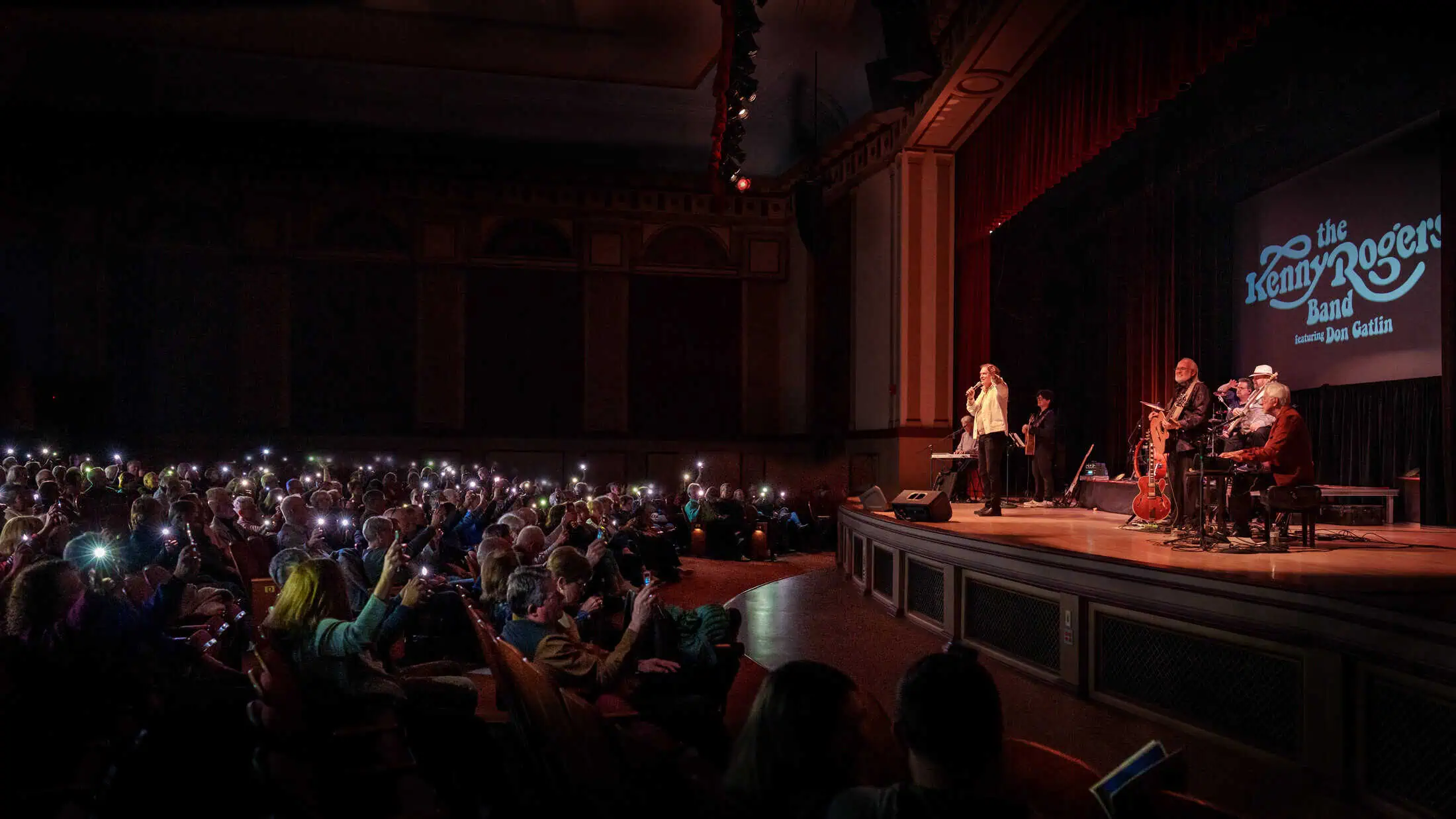
When I arrived, Randy gave me a tour of the venue and told me I could shoot backstage and from the wings during the show—something rarely the case in a live performance. I knew I would take advantage of the opportunity, but use it sparingly, as I didn’t want to be a distraction.
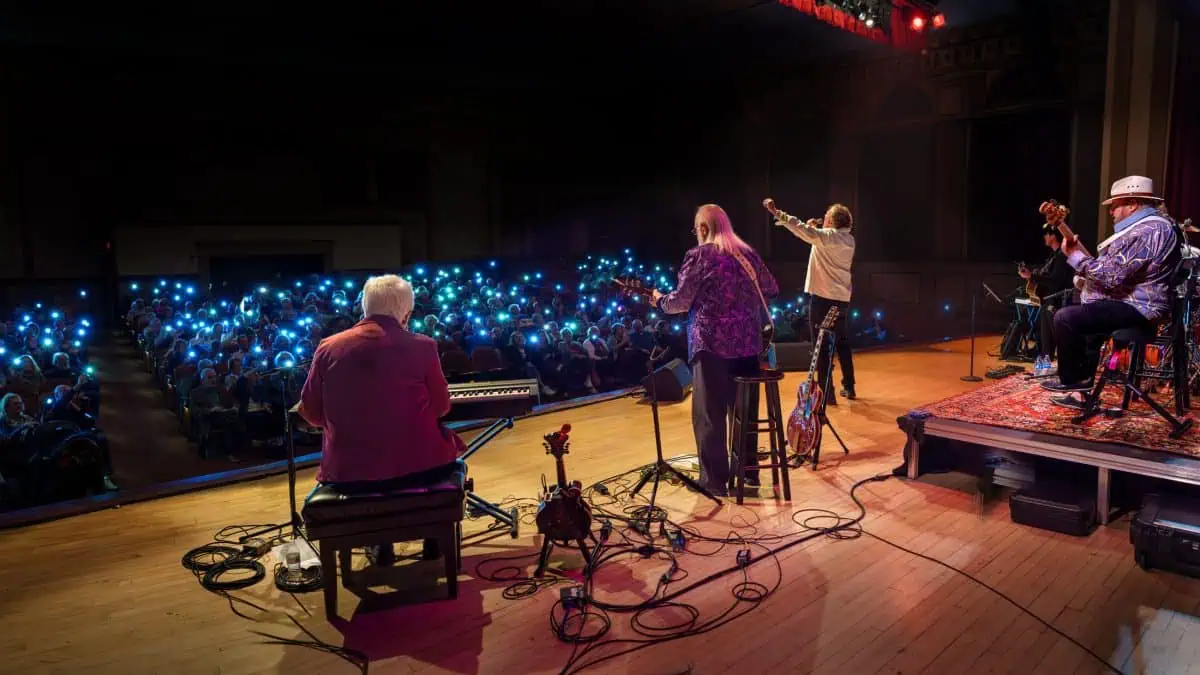
Understanding the Stage Setup
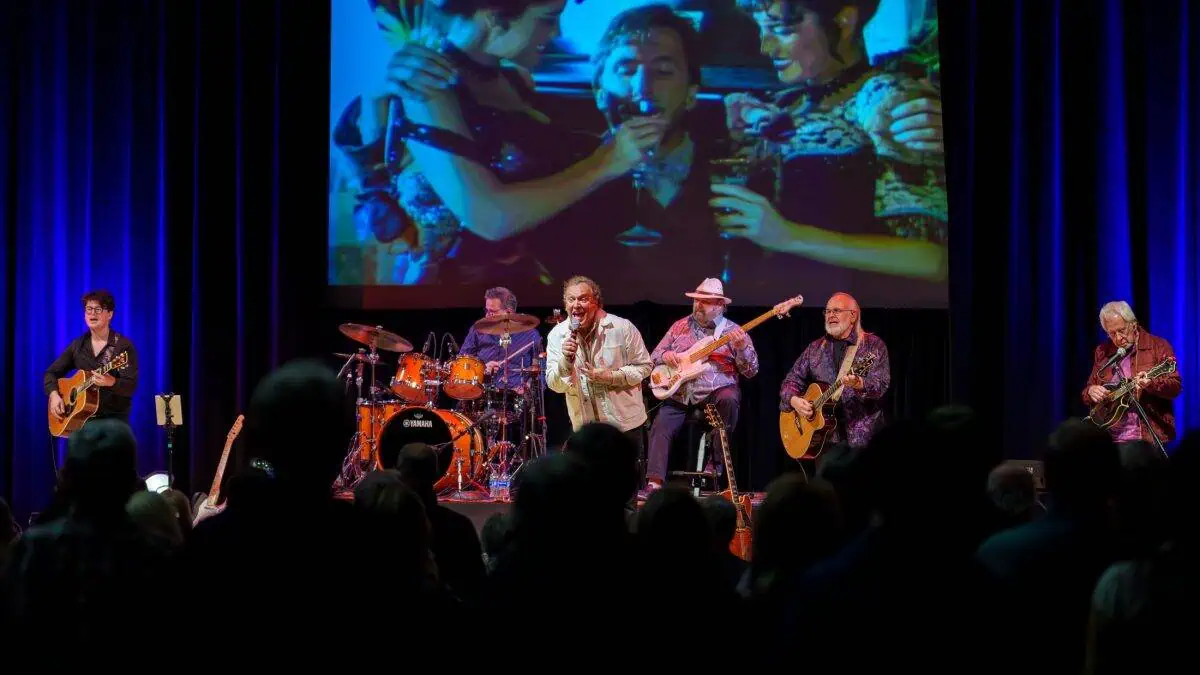
The band uses a simple stage arrangement with a large video screen behind it that shows various video clips and still photos of Kenny Rogers and the band over the years. Several of the guys joined Kenny Rogers in the 1970s, and others joined in the 1990s.
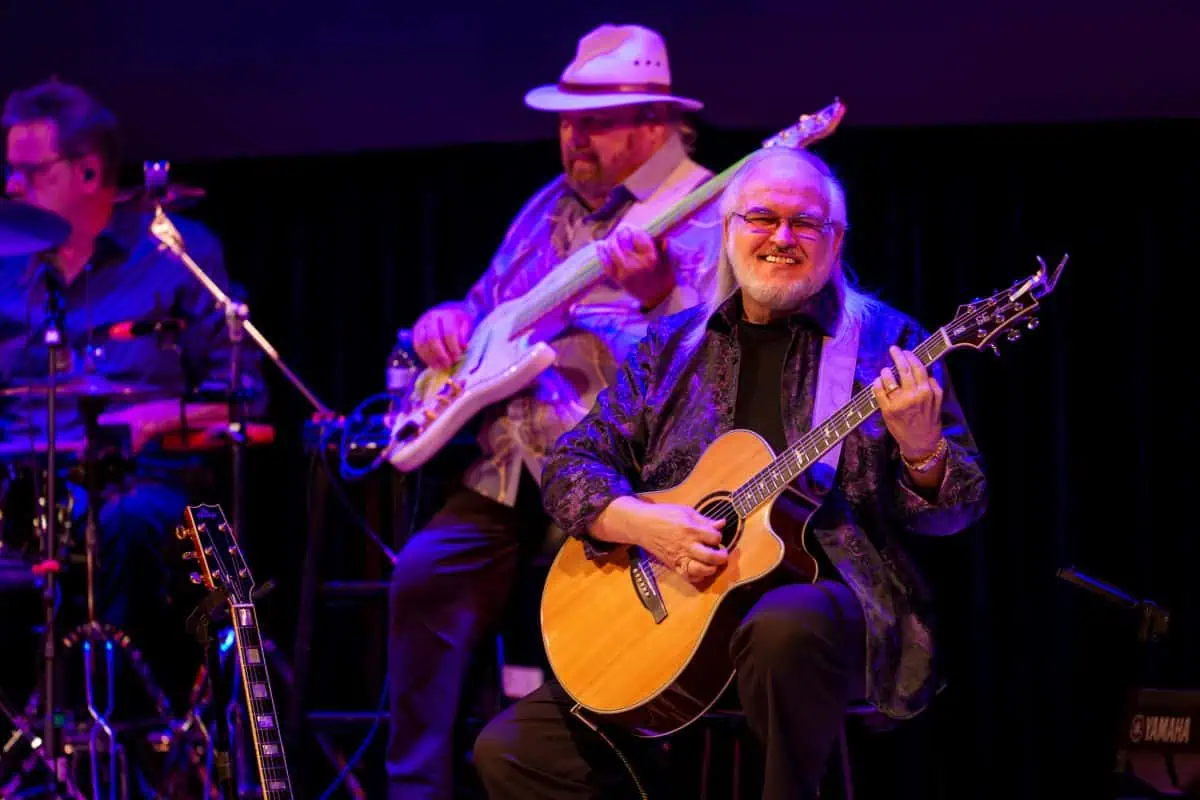
Since the show would include the projected video, I knew to pay attention to flicker. Fortunately, the A1 cameras on Auto Flicker are excellent, so it wasn’t an issue.
Connecting with the Production Team
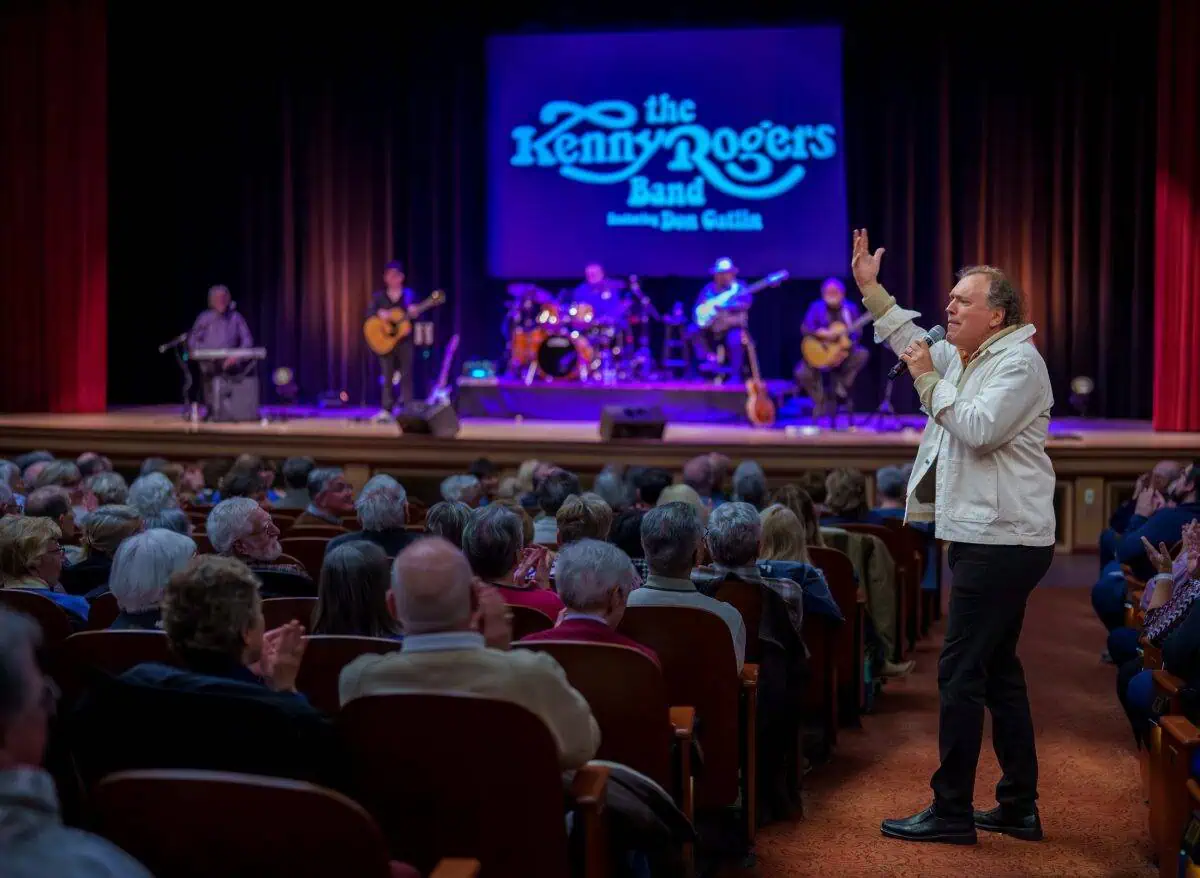
Also, while giving me the tour, Randy introduced me to the school’s production manager, and I quickly connected with him. This theater has a sound and light control booth dead center at the back with seats directly in front. So, if I wanted to shoot any images straight at the stage, I would need access to the box.
A Night to Remember
Watching Randy and the rest of the musicians perform, I was reminded of how powerful photography is—it doesn’t just freeze moments; it preserves stories, legacies, and emotions that might otherwise fade with time.
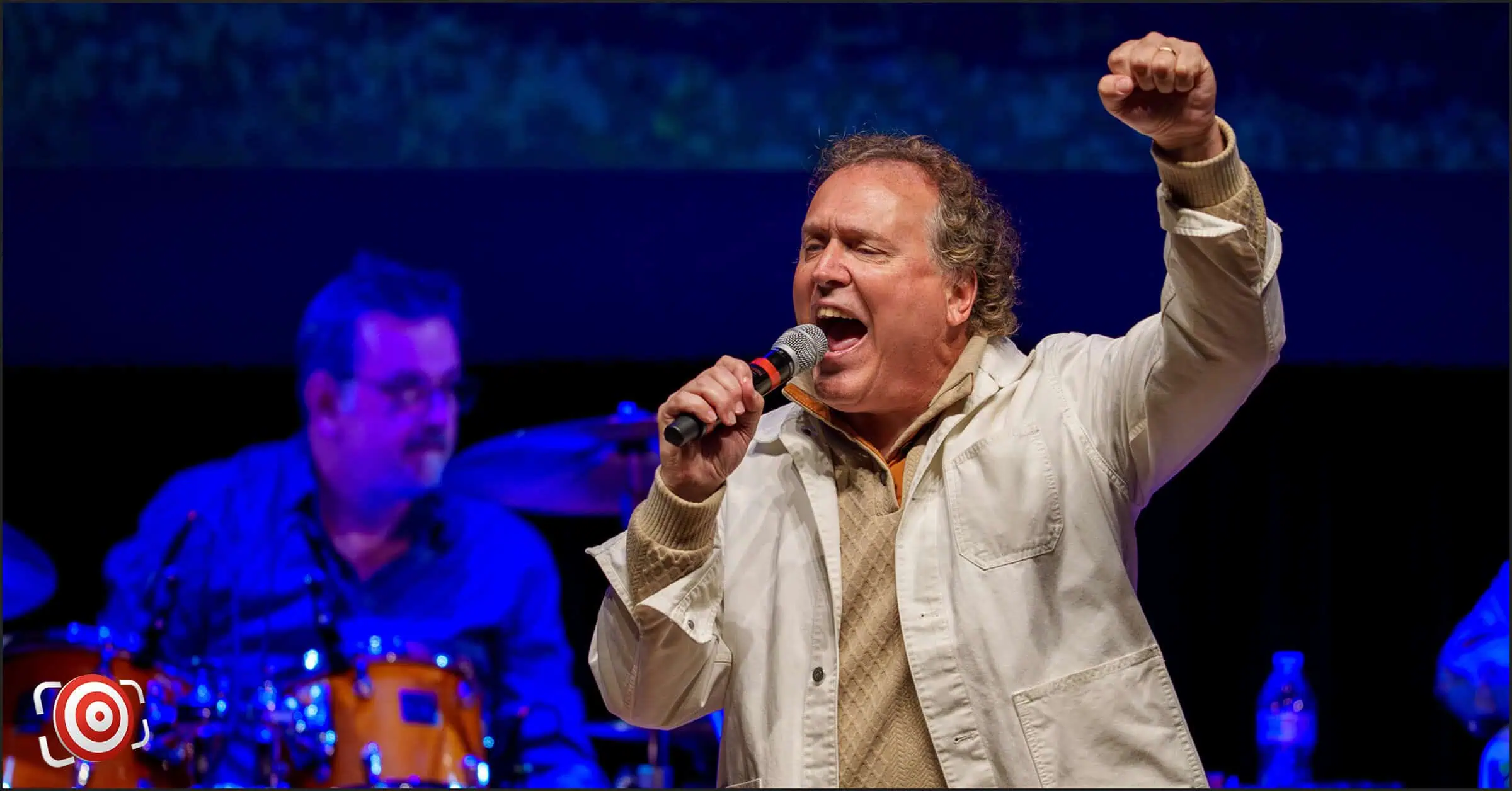
Throughout the show, I moved carefully and quietly, capturing close-ups of the band members immersed in their craft, wide shots of the entire stage, and moments of the audience lost in nostalgia. Being able to document this performance felt like an honor—not just because of my connection with Randy, but because it was a chance to help preserve the spirit of Kenny Rogers’ music in a new way.
After the final encore, as the band left the stage, I packed my gear with gratitude. Photography has taken me on many incredible journeys. Still, this one—reconnecting with old friends, capturing the continuation of a legend’s music, and blending my love for photography with the magic of live performance—was truly special.
As I left the theater that night, I couldn’t help but reflect on how photography has allowed me to meet fascinating people, step into unique experiences, and, most importantly, tell stories that live on long after the shutter clicks. This was more than just another concert shoot—it was a reminder of why I fell in love with photography.
My Top 5 Tips for Concert Photography
It’s not the same regurgitated stuff you find on YouTube and Google.
1. Know Before You Go (Planning and Preparation)
Rock-solid concert photos don’t happen by accident. Research the band’s stage presence, lighting style, and typical setlist beforehand so you know exactly where and when to get your killer shots.
Check venue restrictions—nothing spoils your night faster than being turned away at the door for breaking rules you didn’t bother to learn. Reach out to the venue – the worst anyone can ever say is no!
Gear prep is essential: Charge batteries, clear memory cards, and pick the right lenses in advance.
2. Embrace the Dark Side (Master Low-Light Photography)
Concerts mean low, unpredictable lighting. Select your shutter speed with purpose – you want to stop the action. Depending on your lens and what is in your composition, you may want a wide-open aperture or, for a little more depth of field, a setting of F4.5 or F5.6.
Push your ISO higher: noise beats blurry every single time. The noise tolerance of modern mirrorless digital cameras is fantastic, and the noise reduction capabilities in software like Lightroom, Photoshop, DXO, Affinity, and Luminar NEO are incredible.
3. Timing Is Everything (Anticipate the Action)
Anyone can snap a performer standing at the mic; your goal is capturing emotion, energy, and passion. Watch closely for patterns in a singer’s movements—anticipate jumps, spins, or emotional moments to click your shutter at just the right moment.
Keep your eye glued to the viewfinder and your finger ready on the shutter: split-second decisions separate snapshots from portfolio-worthy images.
4. Angles Matter (Get Creative with Composition)
Don’t plant your feet in one spot and call it a day. Some venues will limit where you can shoot from, but regardless, you need to move around to capture fresh perspectives and find unique angles that others overlook.
When permitted, shoot from below the stage to make the performers look larger-than-life, or frame your shots to include crowd reactions and interaction. Creative composition turns standard concert images into visual storytelling.
5. Edit Smart, Not Hard (Efficient Post-Processing)
Concert photos often need love in post—but don’t fall into the trap of over-editing. Adjust exposure, contrast, and color to enhance what’s already there, not to create a fantasy. Embrace shadows and moodiness, but keep colors believable and skin tones realistic to what you saw at the show. Your edits should bring out the energy of the show, not distract from it.
I hope you found this information useful. Now go pick up that camera and shoot something! Because – “Your BEST shot is your NEXT shot!” — Joe Edelman