

George Tice [1938-2025] was an American photographer celebrated for his black-and-white images, documenting everyday life’s beauty and complexity, particularly in small-town and urban America.
Born in Newark, New Jersey, Tice began his photography career as a teenager and later honed his skills as a member of the U.S. Navy’s photographic division.
His work often focused on the vanishing aspects of American culture, such as small-town architecture, roadside diners, and rural landscapes, blending nostalgia with a sense of timelessness.
Notable projects included Petit’s Mobil Station, Cherry Hill, New Jersey, and the book Urban Landscapes. Tice’s meticulous attention to detail and mastery of large-format photography earned him a significant place in the world of fine art photography, with his work showcased in prominent museum collections worldwide.
Read the full Biography below.
Photography Quotes From George Tice




📸 Did you know?
Tice served in the U.S. Navy during the Korean War, where he worked as a photographer aboard the aircraft carrier USS Wasp. His military experience sharpened his technical skills and influenced his later documentary style.
Videos about George Tice
📸 Did you know?
Tice is best known for his evocative images of small-town and urban America, particularly his home state of New Jersey. His iconic photograph Petit’s Mobil Station, Cherry Hill, New Jersey captures the quiet beauty of everyday American life.
Photography Books: George Tice
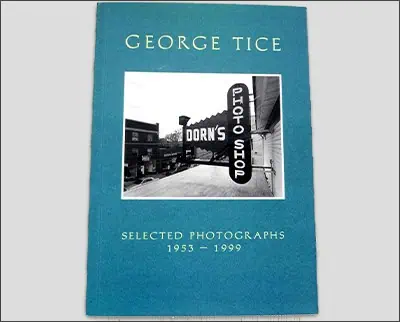
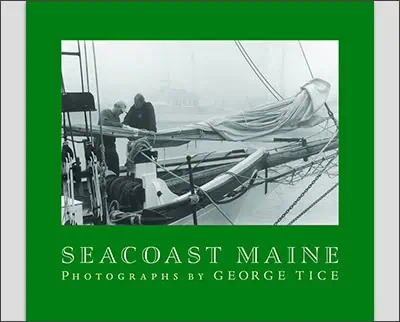
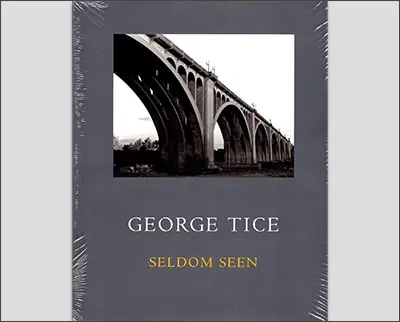
📸 Did you know?
George Tice began his career as a teenager working as a darkroom assistant for a local portrait studio in New Jersey. This early hands-on experience laid the foundation for his mastery of black-and-white printing techniques.
Biography of George Tice
Early Life and Introduction to Photography
George Tice was born in Newark, New Jersey on October 13, 1938. Raised in a working-class family, Tice’s early life was shaped by the urban environment of his hometown. The industrial landscapes, bustling streets, and blue-collar neighborhoods of New Jersey left a lasting impression on him and would later become central themes in his photography.
Tice’s interest in photography began when he joined the Boy Scouts as a teenager. At the age of 14, he received a camera as part of a merit badge project, and this simple gift sparked a lifelong passion.
Fascinated by the ability to capture moments and preserve them through imagery, Tice quickly began to explore photography in greater depth. He spent hours taking pictures and developing prints in his makeshift darkroom at home.
After graduating from high school, Tice joined the U.S. Navy in 1955, where he served as a photographer. His time in the Navy provided him with valuable technical training and experience, sharpening his skills in the darkroom and on the field. It also deepened his understanding of photography as a storytelling medium, laying the groundwork for his future career.
Early Career and Collaboration with Edward Steichen
After completing his military service, Tice returned to New Jersey and began pursuing photography professionally.
In the early 1960s, his work caught the attention of Edward Steichen, the legendary photographer and curator of the Museum of Modern Art (MoMA) in New York City.
Steichen selected one of Tice’s prints, Explosion on the Battleship New Jersey (1959), for inclusion in the MoMA’s permanent collection. This recognition marked a significant turning point in Tice’s career, validating his talent and opening doors to new opportunities.
In 1964, Tice joined the renowned Photo League and began working with prominent photographers of the era. He also began photographing Amish communities in Pennsylvania, producing a series of images that showcased his ability to capture the quiet dignity of his subjects.
These early works established Tice’s reputation as a photographer with a unique eye for composition and a deep sensitivity to the human condition.
Documenting Urban and Rural America
Tice’s career blossomed in the 1970s as he turned his lens toward America’s urban and rural landscapes, particularly those of his home state of New Jersey. His photographs from this period reflect a deep appreciation for the beauty of everyday scenes, from industrial sites and small-town storefronts to weathered barns and gas stations.
One of his most iconic works, Petit’s Mobil Station, Cherry Hill, New Jersey (1974), captures the essence of his style. The image, a nighttime shot of a brightly lit gas station against a dark sky, is both strikingly modern and deeply nostalgic. It reflects Tice’s ability to find poetry in the mundane, transforming ordinary scenes into works of art.
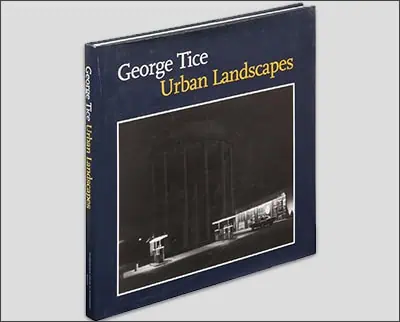
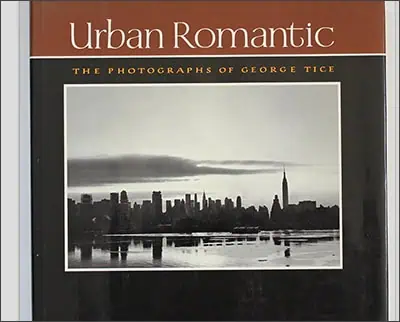
Another significant series, Urban Landscapes, documents the changing face of American cities in the mid-20th century. Tice’s images of Newark, Paterson, and other urban centers highlight the contrasts between modern development and decaying infrastructure.
His work captures a sense of place and history, revealing the stories embedded in the architecture and streets of these communities.
Publications and Major Projects
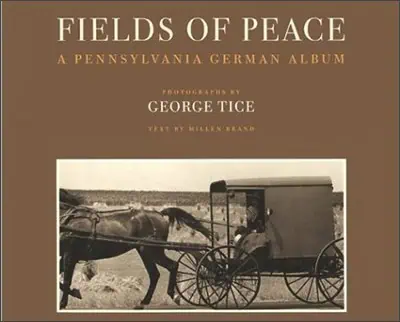
Tice published over 20 books throughout his career, showcasing his extensive work. His first major publication, Fields of Peace: A Pennsylvania German Album (1970), documents the Amish way of life with a sense of respect and intimacy. This book set the tone for his career, demonstrating his ability to combine technical excellence with storytelling.
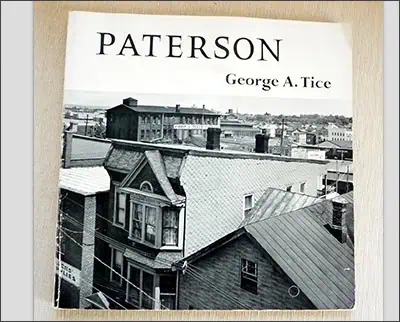
One of Tice’s most celebrated books is Paterson (1972), a visual exploration of the industrial city in New Jersey that inspired poet William Carlos Williams.
In this series, Tice examines the contrasts between Paterson’s rich industrial past and its economic decline, creating haunting and beautiful images. Paterson remains a landmark work in American photography, offering a timeless portrait of a city in flux.
Another notable publication is Urban Landscapes (1975), which compiles Tice’s photographs of New Jersey and other urban environments. This book reflects his fascination with the intersection of the natural and man-made worlds and his deep commitment to documenting America’s architectural heritage.
Style and Techniques
George Tice is best known for his black-and-white large-format photography, which emphasizes detail, texture, and tonal range.
His meticulous compositions and mastery of light and shadow reveal a deep connection to his subjects, whether they are urban landscapes, rural settings, or portraits.
Tice’s work is often described as both documentary and artistic, blending the realism of photojournalism with the aesthetic sensibilities of fine art.
Tice’s images often convey a sense of stillness and introspection, inviting viewers to slow down and appreciate the beauty in everyday scenes.
His ability to find the extraordinary in the ordinary has earned him comparisons to photographers such as Walker Evans and Edward Weston, while his focus on New Jersey and its landscapes has made him a key figure in regional American photography.
Exhibitions and Recognition
Tice’s work has been exhibited in major galleries and museums worldwide, including the Museum of Modern Art, the Metropolitan Museum of Art, and the International Center of Photography in New York.
His photographs are part of numerous permanent collections, including those of the Art Institute of Chicago and the Smithsonian American Art Museum.
Throughout his career, Tice received numerous awards and honors, including fellowships from the Guggenheim Foundation and the National Endowment for the Arts.
His contributions to the field of photography have been widely recognized, and his influence can be seen in the work of contemporary photographers who share his passion for documenting the American landscape.
Legacy and Influence
George Tice’s work had a profound impact on the world of photography, particularly landscape and documentary photography. His ability to elevate everyday scenes into works of art has inspired countless photographers to explore their surroundings with fresh eyes. Tice’s legacy lies not only in his images but also in his commitment to preserving America’s cultural and architectural heritage.
Conclusion
George Tice passed away on January 16, 2025 (age 86). His career is a testament to the power of photography to reveal the beauty, history, and humanity of the world around us.
Through his meticulous craftsmanship and unwavering dedication to his vision, he created a body of work that is both timeless and deeply personal.
Tice’s photographs continue to resonate with audiences, reminding us of the importance of seeing the extraordinary in the ordinary and celebrating the richness of the American landscape.