
Harold Edgerton [1903-1990] was an American engineer, educator, and photographer who revolutionized the field of photography with his development of high-speed and stroboscopic photography.
Born in Fremont, Nebraska, Edgerton earned his degrees at the University of Nebraska and the Massachusetts Institute of Technology (MIT), where he later became a professor.
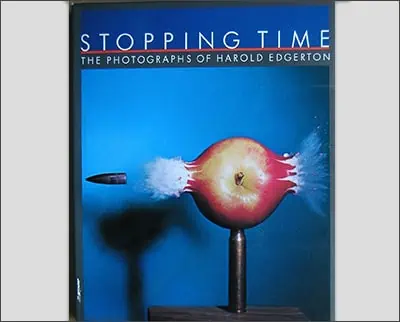
His pioneering work extended the limits of the visible, capturing moments imperceptible to the naked eye, such as a bullet piercing an apple or the splash of a milk droplet. Edgerton’s innovations
Read the full Biography below.
Photography Quotes From Harold Edgerton
📸 Did you know?
Beyond photography, Edgerton’s high-speed imaging technology was applied in World War II for night reconnaissance flights, significantly improving.
Videos about Harold Edgerton
📸 Did you know?
He was a professor at the Massachusetts Institute of Technology (MIT) for his entire career, where he combined his love for engineering and photography to develop groundbreaking photographic techniques.
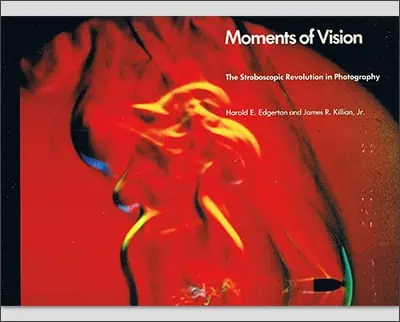
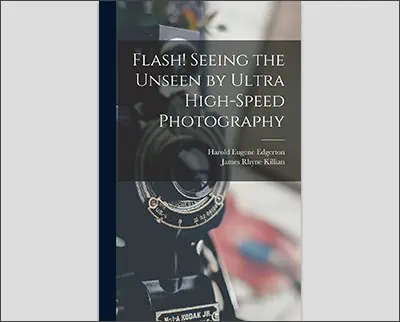
Books by Harold Edgerton
📸 Did you know?
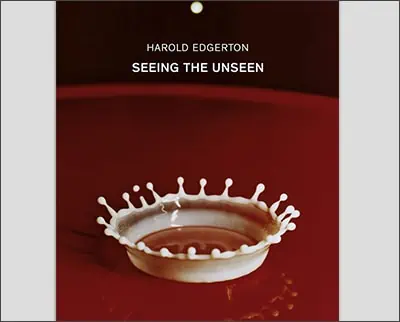
Edgerton’s iconic photograph, “Milk Drop Coronet” (1957), showcasing a milk drop forming a coronet-shaped splash, became one of the most famous images in the history of photography for its ability to freeze a moment invisible to the naked eye.
Biography of Harold Edgerton
Early Life and Academic Pursuits
Born on April 6, 1903, in Fremont, Nebraska, Harold Eugene Edgerton grew up in a world on the brink of technological transformation.
His early interest in electricity led him to the University of Nebraska-Lincoln, where he earned a degree in electrical engineering.
Edgerton’s passion for blending science and photography began to take shape during his graduate studies at the Massachusetts Institute of Technology (MIT), where he would spend the majority of his academic and professional career.
Innovations in Stroboscopic Photography
While at MIT, Edgerton pioneered the development of electronic flash photography, inventing the stroboscope, a device that could flash light at incredibly fast speeds.
This technology allowed Edgerton to freeze motion in photographs with unprecedented clarity and detail. His early experiments included capturing balloons in mid-pop and bullets piercing through apples, images that combined aesthetic beauty with scientific insight.
Contributions to Photographic and Scientific Fields
Edgerton’s work extended beyond the laboratory and into diverse fields such as industrial troubleshooting, nighttime aerial reconnaissance during World War II, and underwater exploration.
His innovations led to the development of side-scan sonar technology, significantly advancing the field of underwater archaeology by enabling the detailed mapping of the ocean floor.
Teaching and Mentorship
“Doc,” as he was affectionately known by his students, was a beloved figure at MIT, where he taught for over four decades.
Edgerton’s commitment to education was evident in his hands-on teaching style and his dedication to making science accessible and exciting.
He mentored countless students, many of whom went on to make significant contributions to engineering, photography, and science.
Collaborations and Exhibitions
Edgerton’s work caught the attention of artists, scientists, and the general public alike.
He collaborated with photographer Gjon Mili, and their work was featured in Life magazine, bringing Edgerton’s high-speed photography to a wide audience.
His photographs were exhibited in prestigious venues such as the Museum of Modern Art in New York, highlighting the artistic merit of his scientific explorations.
Legacy and Honors
Throughout his life, Edgerton received numerous awards and honors in recognition of his contributions to photography and science, including the National Medal of Science awarded by President Ronald Reagan in 1986.
Edgerton’s legacy is enshrined in the countless images that reveal the beauty and complexity of moments too fast for the human eye to see.
He revolutionized the way we visualize the world, from the delicate dance of a milk droplet’s splash to the intricate mechanics of a hummingbird in flight.
Later Years and Continuing Impact
Harold Edgerton continued to innovate and inspire until his passing on January 4, 1990.
Today, his work lives on through the Edgerton Center at MIT, which continues to foster the spirit of discovery and innovation that defined his life.
Edgerton’s photographs and inventions have left an indelible mark on the fields of photography, engineering, and beyond, capturing not just moments in time, but the wonder and curiosity that drive human inquiry.
Conclusion
Harold “Doc” Edgerton’s career bridged the gap between art and science, proving that the two realms are not mutually exclusive but rather complementary lenses through which we can explore the world.
His pioneering work in high-speed photography opened new vistas for understanding and appreciating the dynamic beauty of life, making the invisible visible and expanding the possibilities of visual expression.
Edgerton’s enduring legacy is a testament to the power of curiosity, innovation, and the enduring quest to see the world in new ways.