Table of Contents
What is Long Exposure?
A long exposure is any photograph made with a slow shutter speed that intentionally records motion over time.
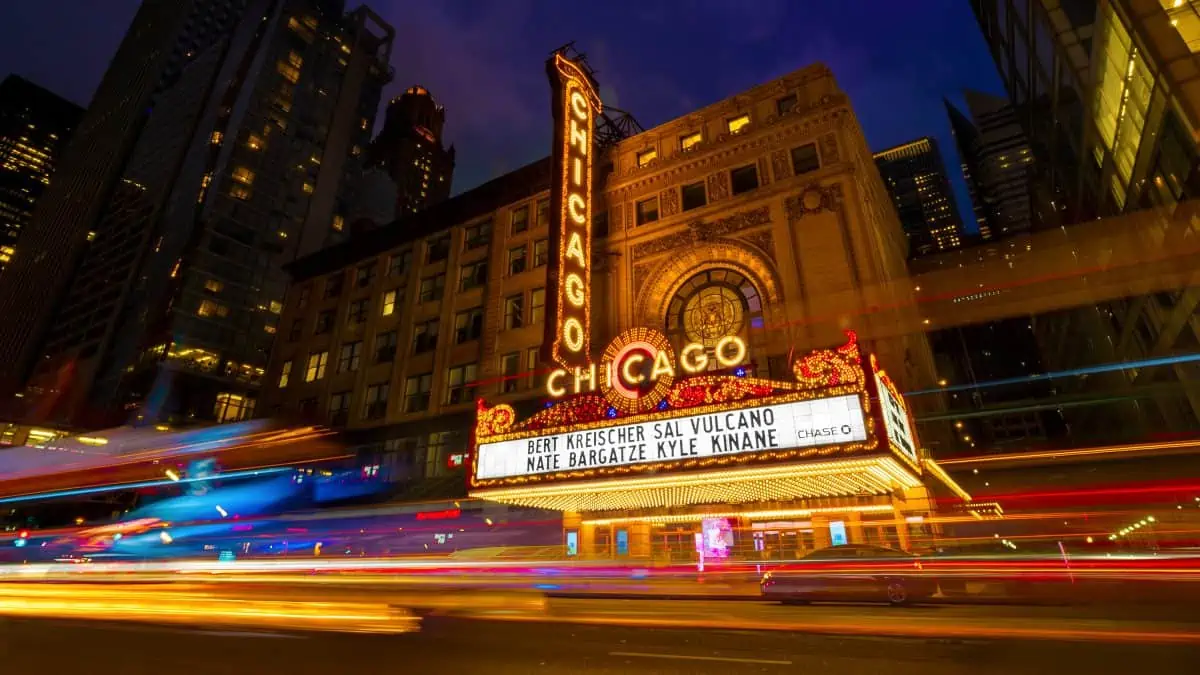
Instead of freezing a moment, long exposure captures movement, creating smooth water, streaking lights, soft clouds, or ghostly trails that express the passage of time.
Technically, any exposure slower than about 1/30 second can be considered “long,” but in creative terms, we usually mean 1 second to several minutes, depending on the subject and effect.
Long exposure photography isn’t just about exposure time — it’s about seeing motion as texture and emotion.
How Long Exposure Works
A long exposure allows your camera’s sensor (or film) to collect light for an extended period.
As the shutter remains open, stationary subjects stay sharp, while moving subjects blur or streak, depending on how much they move during the exposure.
The effect depends on:
- Shutter speed: How long the sensor collects light.
- Movement speed: How fast the subject is moving.
- Lighting conditions: How bright or dark the environment is.
When done right, long exposure transforms reality into something poetic — the world rendered not as it is, but as it feels over time.
Creative Uses of Long Exposure
Long exposure is both technical and artistic.
It’s used to:
- Smooth water surfaces — turning waves, rivers, and waterfalls into silky textures.
- Capture light trails — from cars, stars, or fireworks.
- Reveal motion in clouds — adding atmosphere and direction.
- Show crowds disappearing — by averaging moving people into nothingness.
- Create star trails or astrophotography images — where Earth’s rotation paints circular patterns in the sky.
The effect always depends on intent. A 1-second exposure softens water; a 60-second exposure turns it to glass.
Essential Gear for Long Exposure Photography
- Tripod: Absolutely critical. Even tiny vibrations will blur the entire frame.
- Remote shutter release or self-timer: Prevents camera shake when pressing the shutter.
- Neutral Density (ND) filters: Reduce the amount of light entering the lens so you can use slower shutter speeds even in bright daylight.
- Sturdy surface or weights: To stabilize the tripod in wind or moving water.
- Low ISO: Minimizes noise and maximizes dynamic range.
- Manual focus: Locks in sharpness so your camera doesn’t refocus mid-exposure.
These tools let you take full control of the exposure and produce consistently sharp, controlled results.
How to Set Up a Long Exposure
- Switch to Manual or Bulb mode.
Bulb mode keeps the shutter open as long as you hold the release (great for exposures longer than 30 seconds). - Set your ISO to 100 (or base ISO).
- Choose your aperture — typically f/8 to f/16 for optimal sharpness and depth.
- Attach an ND filter if needed to reduce light.
- Use a tripod and remote or timer.
- Take test shots and adjust shutter speed until you achieve the desired effect.
For example:
- Moving water at sunset → 1–5 seconds.
- Ocean waves midday with ND filter → 20–60 seconds.
- Star trails → several minutes or longer.
Neutral Density (ND) Filters and Long Exposure
ND filters are the secret weapon of long exposure photography.
They act like sunglasses for your lens, reducing light intensity without altering color.
Common strengths include:
- 3-stop ND — mild effect, good for dim conditions.
- 6-stop ND — ideal for softening motion in moderate light.
- 10-stop ND — for extreme exposures in bright daylight.
Stacking filters or using variable NDs allows exposures of several minutes even under full sun.
Exposure Calculation Tips
To predict long exposure times, you can use this simple rule:
Each additional ND stop doubles your exposure time.
Example:
If your base exposure is 1/60 sec and you add a 10-stop ND filter:
1/60 × 2¹⁰ = 16.7 seconds
Apps like PhotoPills or LEE Stopper App make this process instant, calculating exact exposure times for any filter combination.
Dealing with Reciprocity Failure (Film)
If you shoot film, long exposures may trigger reciprocity failure, in which the film loses sensitivity. In that case, you must extend exposure time beyond the meter reading (and sometimes apply color corrections).
Digital sensors don’t suffer from reciprocity failure — though long exposures may introduce thermal noise or hot pixels instead.
Long Exposure in Daylight vs. Night
| Lighting Condition | Typical Shutter Speed | Notes |
|---|---|---|
| Daylight with ND filter | 1–60 sec | ND filter required; smooth water and clouds |
| Dusk or twilight | 1–30 sec | Perfect for city lights and reflections |
| Night sky / astrophotography | 15 sec – several minutes | For star trails or light painting |
| Urban night scenes | 5–30 sec | Light trails, glowing windows, and movement contrast |
The creative sweet spot often lives between 2 and 30 seconds — long enough to express motion, short enough to maintain detail.
Common Mistakes
- Camera movement: Even slight vibrations ruin sharpness — always use a tripod.
- Incorrect ND strength: Too strong, and your exposure may run several minutes longer than expected.
- Light leaks: Cover your viewfinder during long exposures to prevent stray light.
- Hot pixels or noise: Use in-camera long exposure noise reduction or correct in post.
- Overexposure in bright light: Start at low ISO and small aperture before adding ND filters.
Creative Long Exposure Techniques
- Intentional camera movement (ICM): Move the camera during exposure for painterly streaks.
- Multiple exposures: Combine different time intervals for dynamic composites.
- Light painting: Use a flashlight or LED wand to “paint” light during the exposure.
- Ghost portraits: Have subjects stay still briefly, then move to create ethereal trails.
Long exposure is as much about experimentation as technique — and no two images are ever the same.
The Last Frame
Long exposure photography is about slowing down — both technically and mentally.
It forces you to think in seconds instead of fractions, to anticipate movement instead of freezing it.
When you master long exposure, you start capturing not just how a place looks, but how it changes — revealing a layer of time invisible to the naked eye.
That’s when photography stops being about taking pictures — and starts being about making them.
Related Photography Terms
Shutter Speed, Tripod, ND Filter
Click this link for the full list of Photography Terms