

Minor White [1908 – 1976] was an influential American photographer, educator, and editor known for his contemplative and spiritual approach to photography.
Born in Minneapolis, Minnesota, White studied botany and wrote poetry before turning to photography in the late 1930s.
He served in World War II and afterward co-founded Aperture magazine, which became a crucial platform for serious photographic discourse.
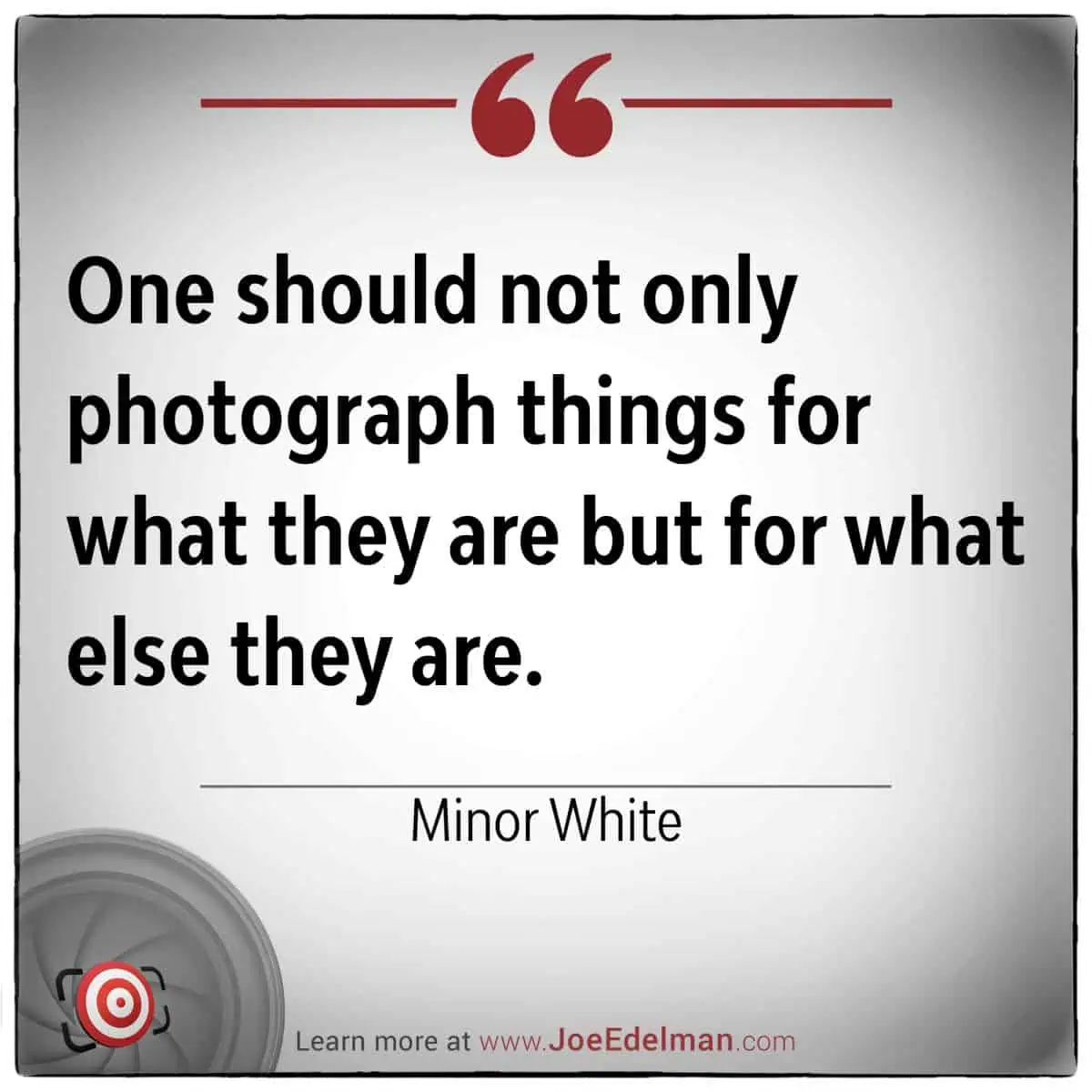
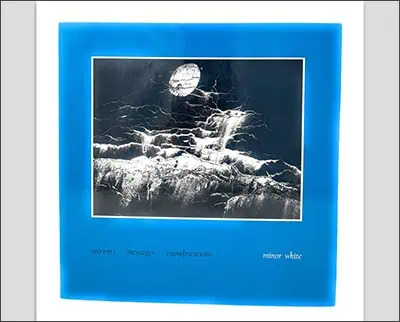
White’s work is characterized by its exploration of metaphysical themes, often using abstract and symbolic imagery to evoke emotional and spiritual responses.
He believed in the transformative power of photography, both for the artist and the viewer.
As a teacher at institutions like the Rochester Institute of Technology, MIT, and the California School of Fine Arts, White influenced generations of photographers and left a profound legacy in the world of fine art photography.
Read the full Biography below.
Photography Quotes From Minor White


📸 Did you know?
Before becoming a renowned photographer, White worked as a waiter, bartender, and even a night watchman. These varied jobs allowed him to observe people and environments closely, informing his later work with a unique perspective on human experiences.
Videos about Minor White
📸 Did you know?
Minor White was deeply influenced by the teachings of Zen Buddhism, which he incorporated into his photographic practice. He believed that photography could be a form of meditation and spiritual exploration, often using his camera to capture moments of introspection and revelation.
Photography Books: Minor White
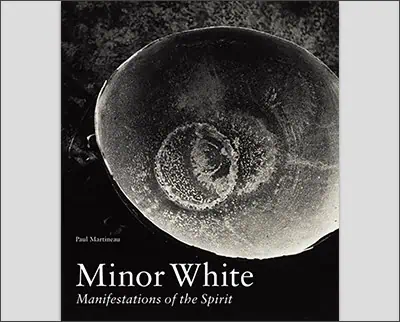
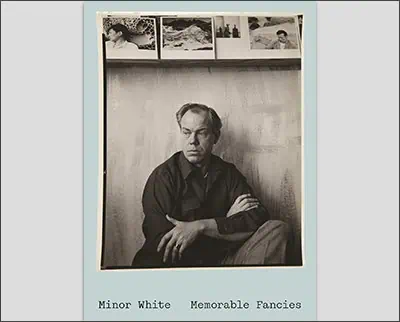
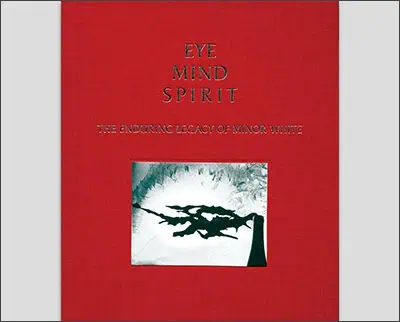
📸 Did you know?
White was one of the founding editors of the influential photography magazine “Aperture,” which he helped establish in 1952. The magazine aimed to promote fine art photography and provide a platform for photographers to discuss their work and philosophies.
Biography of Minor White
Early Life and Introduction to Photography
Minor Martin White was born in Minneapolis, Minnesota on July 9, 1908.
From an early age, White exhibited a deep curiosity about the natural world and a profound sensitivity to his surroundings.
His early years were marked by a sense of solitude and introspection, which would later become central themes in his work.
White’s initial interest in the arts manifested in poetry, but his passion for photography began to take shape during his college years.
Education and Early Career
White attended the University of Minnesota, where he studied botany and microbiology.
Despite his scientific pursuits, his creative inclinations led him to explore photography. In 1937, White moved to Portland, Oregon, where he began his photographic career with the Works Progress Administration (WPA).
During this time, he documented historical buildings slated for demolition, developing a keen eye for detail and an appreciation for the interplay of light and shadow.
Influence of Alfred Stieglitz and Ansel Adams
In the early 1940s, White became increasingly influenced by the work of Alfred Stieglitz and his concept of “equivalents”—photographs that convey emotional and spiritual states.
This philosophy resonated deeply with White, who sought to infuse his own work with symbolic and metaphorical meaning.
His encounter with Ansel Adams in 1946 proved pivotal; Adams invited White to join him at the California School of Fine Arts (now the San Francisco Art Institute), where he taught photography alongside Adams and Edward Weston.
This period was formative for White, allowing him to refine his technical skills and develop his distinctive vision.
Teaching and Photographic Philosophy
White’s approach to photography was deeply rooted in his belief that the medium could transcend mere documentation and become a vehicle for personal and spiritual exploration.
He emphasized the importance of pre-visualization—the concept of imagining the final image before capturing it.
White also introduced the idea of “sequences,” where individual photographs are arranged to create a cohesive narrative or evoke a particular emotion.
This method allowed viewers to engage with his work on a deeper, more introspective level.
In 1953, White moved to Rochester, New York, to join the faculty of the Rochester Institute of Technology (RIT).
He also worked closely with Beaumont Newhall at the George Eastman House, further cementing his role as an educator and mentor.
White’s teaching career spanned several institutions, including the Massachusetts Institute of Technology (MIT), where he influenced a generation of photographers with his innovative techniques and philosophical approach.
Aperture Magazine and Legacy
In 1952, White co-founded Aperture magazine with a group of like-minded photographers, including Dorothea Lange, Ansel Adams, and Nancy Newhall. Aperture was conceived as a forum for advancing photographic art and education.
Under White’s editorial guidance, the magazine became a leading publication in the field, known for its high-quality reproductions and thoughtful essays.
White used Aperture to promote the idea of photography as a medium capable of profound artistic and spiritual expression.
Major Works and Exhibitions
White’s body of work is characterized by its poetic and meditative quality.
His series “Equivalents,” inspired by Stieglitz, explored the symbolic potential of everyday scenes and natural forms.
Another significant project, “The Sound of One Hand Clapping,” exemplifies his use of sequences to create a narrative journey.
White’s work was exhibited widely, including notable shows at the Museum of Modern Art in New York, the San Francisco Museum of Modern Art, and the George Eastman House.
Personal Life and Challenges
White’s personal life was marked by periods of introspection and struggle.
As a gay man in mid-20th-century America, he faced societal prejudices and personal conflicts.
These challenges influenced his work, infusing it with themes of longing, introspection, and the search for identity.
White’s diaries and writings reveal a deeply philosophical and spiritual individual, constantly seeking to reconcile his inner experiences with his artistic practice.
Later Years and Death
In the 1970s, White continued to teach and produce work that pushed the boundaries of photographic art.
He remained committed to exploring the medium’s potential for personal and spiritual expression until his death.
Minor White passed away on June 24, 1976, in Boston, Massachusetts, leaving behind a rich legacy that continues to influence photographers and artists.
Legacy and Impact
Minor White’s contributions to photography extend beyond his images; his teachings, writings, and editorial work have had a lasting impact on the field.
He is remembered as a pioneer who elevated photography to an art form capable of deep emotional and spiritual resonance.
White’s exploration of sequences and his emphasis on the symbolic potential of photography have inspired countless photographers to see beyond the literal and engage with the medium on a more profound level.
Conclusion
Minor White’s career is a testament to his unwavering belief in the transformative power of photography.
Through his innovative techniques, philosophical approach, and dedication to teaching, he reshaped the landscape of photographic art.
White’s work continues to inspire and challenge viewers to look beyond the surface and explore the deeper meanings that lie within the photographic image.
His legacy endures, reminding us of the profound connection between the artist’s inner world and the images they create.