Table of Contents
I moderate and sometimes delete comments on my social media posts. There, I said it!
My goal isn’t to silence disagreement, but to protect the learning environment that is my social media profile.
In short, I approach my social media the same way I approach teaching in a classroom. I show up prepared, I explain the hows and whys, and I guide the learning.
That means not every comment belongs, just like not every interruption belongs in a classroom.
Yes, I Sometimes Delete Comments
Not all comments. Just the rude, dismissive, and reflexively opinionated ones.
I don’t do it because my feelings are fragile or because I can’t handle disagreement, and it’s not because I think I’m always right. I am a married man, I know better!
I delete comments because my social media page is an educational space, and all classrooms work best when there’s a purpose, a direction, and respect for how people actually learn.
When I was growing up, each classroom had just one teacher. Not a panel. Not a comment section full of opinions. Just one teacher guiding the learning. That is still standard practice in schools today.
Follow this link to read my complete Terms of Service
The Social Media Opinion Problem
Over time, social media has led many people to think that every post needs an opinion. Not a question. Not curiosity. An opinion. Scroll, react, pronounce judgment, move on.
If you’ve ever shared your work online, you’ve probably seen how quickly a useful conversation can get derailed.
Photography is especially affected by this. Many middle-aged and older photographers feel the need to either agree or disagree as soon as they see an idea that doesn’t align with their own approach. There’s no conversation or curiosity, just a quick judgment, and those quick judgments don’t teach us anything.
* It is mostly white, middle-aged, and older photographers with very little photographic skill who are the biggest offenders. Just keepin it real.
My Page Is Not a Debate Club
That’s not a debate format. It’s a teaching format.
When I share content, I’m not asking, “What do you think?” I’m explaining:
- WHY something works
- HOW it works
- or why it matters
That’s a very different goal.
Debate has its place, and so does discussion. But when the discussion is nothing more than surface-level opinion swapping, the learning stalls. The loudest voices aren’t the most informed, and repetition starts to feel like insight. It isn’t.
Quotes Are Not Fortune Cookies
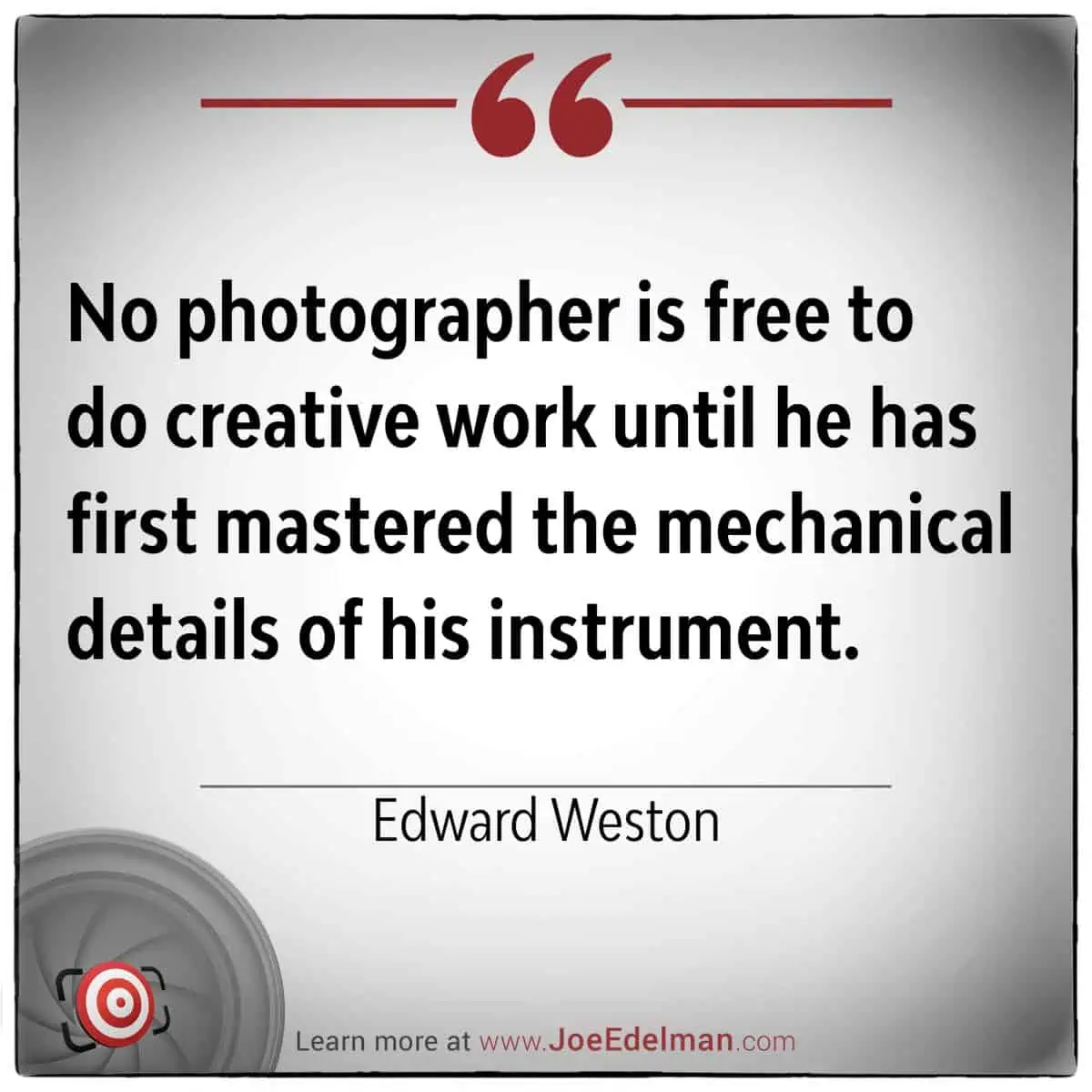
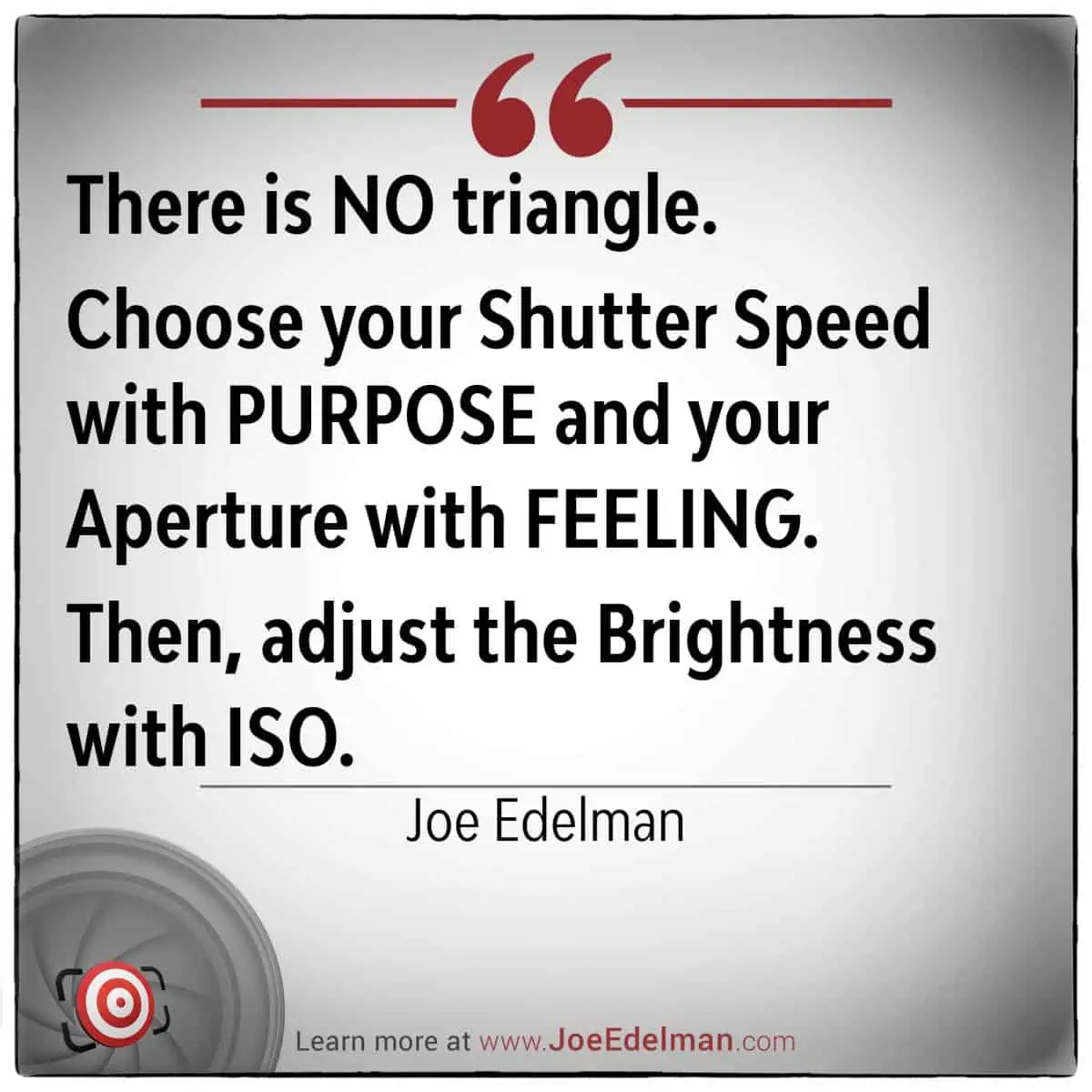
Let me give you an example of this problem. Each day (Mon-Fri), I share quotes from well-known photographers and include links to their biographies. I do this on purpose.
A quote is not a standalone truth. A quote is just a glimpse into a lifetime of work, experience, mistakes, and growth. Treating it as a standalone sound bite misses the point entirely.
If someone dismisses a quote without knowing who said it or why, they aren’t helping others learn; they just interrupt the learning process.
Context matters. History matters. Understanding the why matters.
Curiosity Builds Skill. Opinions Don’t.
Here’s the uncomfortable truth.
Questions rooted in curiosity move learning forward. Opinions rarely do. Asking “Why did they believe that?” or “How does that apply today?” or “What problem were they trying to solve?” shows thought and consideration, and when those questions are answered, they promote learning.
Blunt statements like “I disagree.” “That’s outdated,” or “I’ve never needed that,” don’t add any value to the conversation and they don’t teach you how to make better photographs.
Engagement Is Not the Same as Learning
Social media wants engagement to keep people on their website longer. That gives them the opportunity to show more advertising. They reward posts that get more comments, reactions, and conversations. High engagement might be good for algorithms. It is not automatically good for education.
My goal is not to generate the most comments. I want to help photographers think more clearly and photograph more intentionally. If protecting that goal means fewer comments, I’m fine with that.
What Learning Science Actually Tells Us
Decades of research show that people learn best by actually doing things, not just by talking about them or sharing opinions about ideas they haven’t tried.
People often say they learn best by reading, watching a video, or having a discussion, but that’s not how learning works. Those are just preferences. Research shows that real learning happens by doing.
Talking about ideas without putting them into practice often feels productive, but it rarely leads to real results. Practice is how we improve.
This Is About Boundaries, Not Control
My policy isn’t about saying “My way is the only way.” I’m simply setting expectations.
I moderate comments to protect the educational intent of my content. When dismissive or off-topic comments take over, the main lesson gets lost, new photographers stop reading, and the focus shifts from understanding to noise.
Deleting a dismissive, rude, or argumentative comment isn’t punishment. It’s a way to shape the discussion and keep it on track, just as a teacher in a classroom would.
You are always welcome on my profiles if you are genuinely curious and willing to think before you react.
That’s not censorship, it’s just setting boundaries.
I show up prepared. I do the work. I explain the hows and whys. I don’t teach from a book. I share from over 50 years of experience. If you want to argue, show off, or dismiss ideas, this probably isn’t the right place for you.
My role is to teach. If you choose to join in, your role is to participate with curiosity. That’s the deal because learning requires focus. (See what I did there ;-)
The Last Frame
You may not be an educator, but you probably have your own social media profiles, and you may even market your photography to potential clients. You have probably also dealt with rude, dismissive, and inappropriate comments on your posts.
NEVER be afraid to delete them and even ban the offending users. Your profile or page is YOUR space. Treat it with care!
Set the example and don’t tolerate disrupters. Now go pick up that camera and shoot something! Because – “Your BEST shot is your NEXT shot!” — Joe Edelman