The Pattern Nobody Talks About
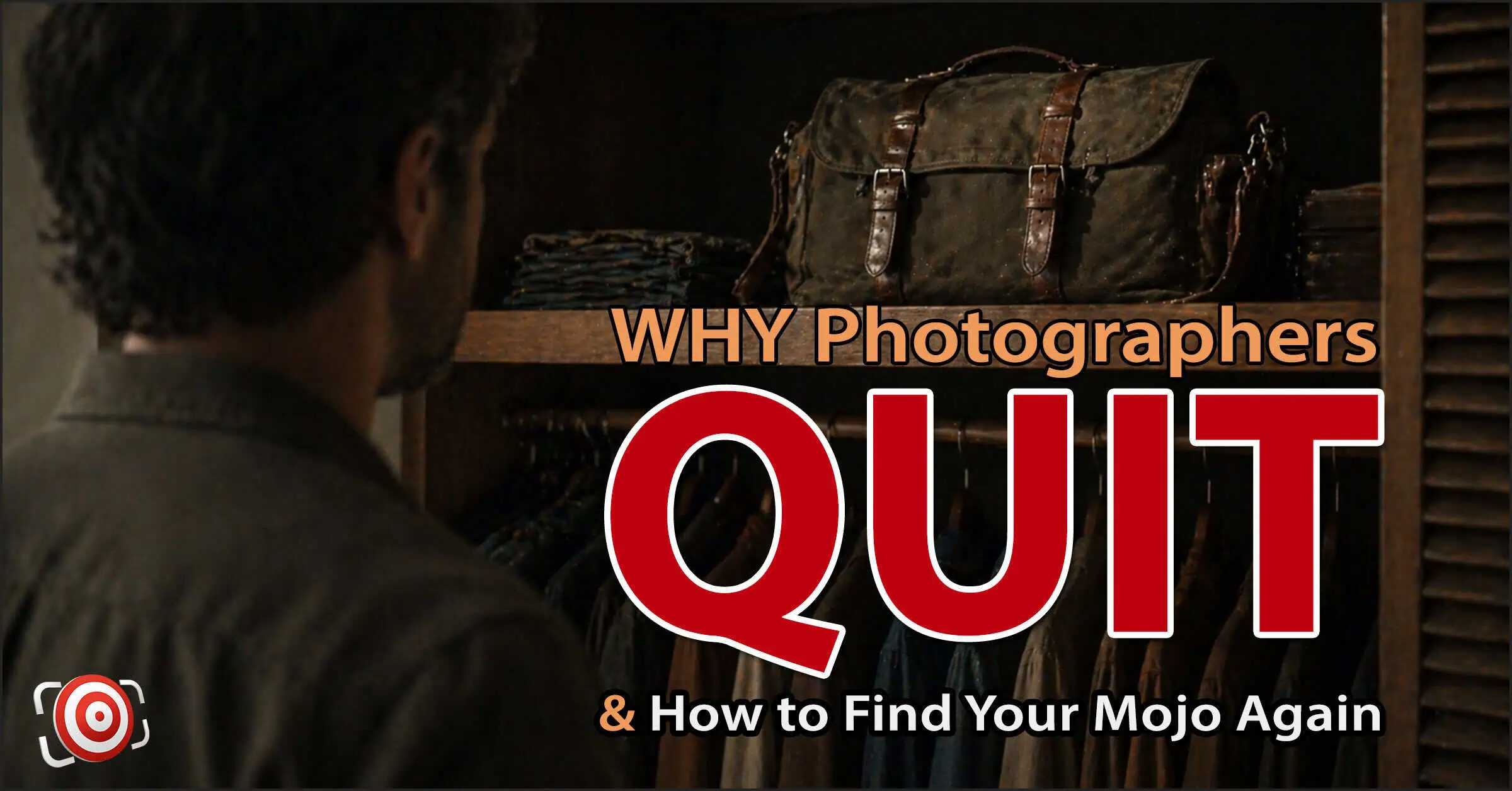
I’ve watched it happen more times than I can count. A person in their 30s or 40s with disposable income discovers photography and gets hooked on creating images. Then, somewhere between six months and two years into the process, after investing serious money in gear and devoting real hours to watching tutorials and reading articles, the camera ends up in a closet, and the dream gets filed under “things I tried.”
What makes this painful is that the people who quit are often the ones who cared the most. They weren’t casual about it. They were passionate, motivated, and willing to spend real money to pursue something they loved. And somehow, all of that effort still wasn’t enough to keep them going.
If that story sounds familiar, this article is for you. Not to make you feel better about quitting, but to help you understand what actually happened and give you a real plan to get back to something you clearly loved enough to invest in.
Table of Contents
You Bought the Wrong Solution
Here’s the hard truth that the photography equipment industry doesn’t want you to hear: the camera didn’t fail you. Your expectations of what the camera would do for you were never realistic to begin with.
The marketing around camera gear is brilliantly deceptive. High-res sensors, eye-tracking autofocus, dynamic range that would have seemed like science fiction twenty years ago — the technology genuinely is incredible, and it’s presented in a way that makes it seem like the gear is doing the heavy lifting.
What the marketing doesn’t make clear is that the gear only removes certain technical obstacles. It doesn’t teach you to see or help you to understand light. In other words, the gear doesn’t give you the foundational skills that separate consistently good photography from occasional lucky shots.
So you spent $3,000 or more on a camera body and a couple of lenses, and your photos still don’t look like the work of photographers you admire. That gap is demoralizing, and it feels like a personal failure. The reality is, it’s a gap in training, not a gap in talent, and those are two very different problems.
Think about it this way. An electrician who walks into a hardware store and buys $3,000 worth of tools doesn’t expect to rewire a house correctly on the first try. Nobody looks at a carpenter’s table saw and assumes the saw is what makes them good at building furniture. But somehow, with cameras, we’ve collectively decided that the gear closes the gap between beginner and skilled practitioner. It doesn’t.
The tools in any craft require training, repetition, and time — a lot of time — before they produce reliable results in the hands of the person holding them. The fact of the matter is that these cameras are so technologically impressive that they create a false sense of ability right out of the box, and that false sense of ability is what sets you up for disappointment. The camera handled the exposure. The camera nailed the focus. But the image still doesn’t look the way you imagined it, and that’s because the camera cannot see what you see, feel what you feel, or make the creative decisions that turn a technically correct photograph into a compelling one. That part is entirely on you, and it takes time to develop. There are no shortcuts.
The Social Media Wrecking Ball
The gear trap would be bad enough on its own, but most people who quit have also been quietly destroyed by social media, and they don’t fully realize it.
Instagram, YouTube, and every photography community online bombard you with a constant stream of best-in-class images from photographers who have been doing this for decades, who shot hundreds of frames to get one keeper, who spent hours in post-processing, and who have built entire personal brands around making their work look effortless. You’re scrolling through a highlight reel and measuring it against your everyday reality, and that comparison is designed to make you feel inadequate.
Here’s what makes it worse: the algorithm doesn’t show you learning curves. It doesn’t show you the 847 images that didn’t work before the one that did. It doesn’t show you the five years of consistent shooting that built the eye behind the photograph you’re admiring. You see the result, and you compare it to your process, and that comparison is completely unfair to you.
Imposter Syndrome Is Lying to You
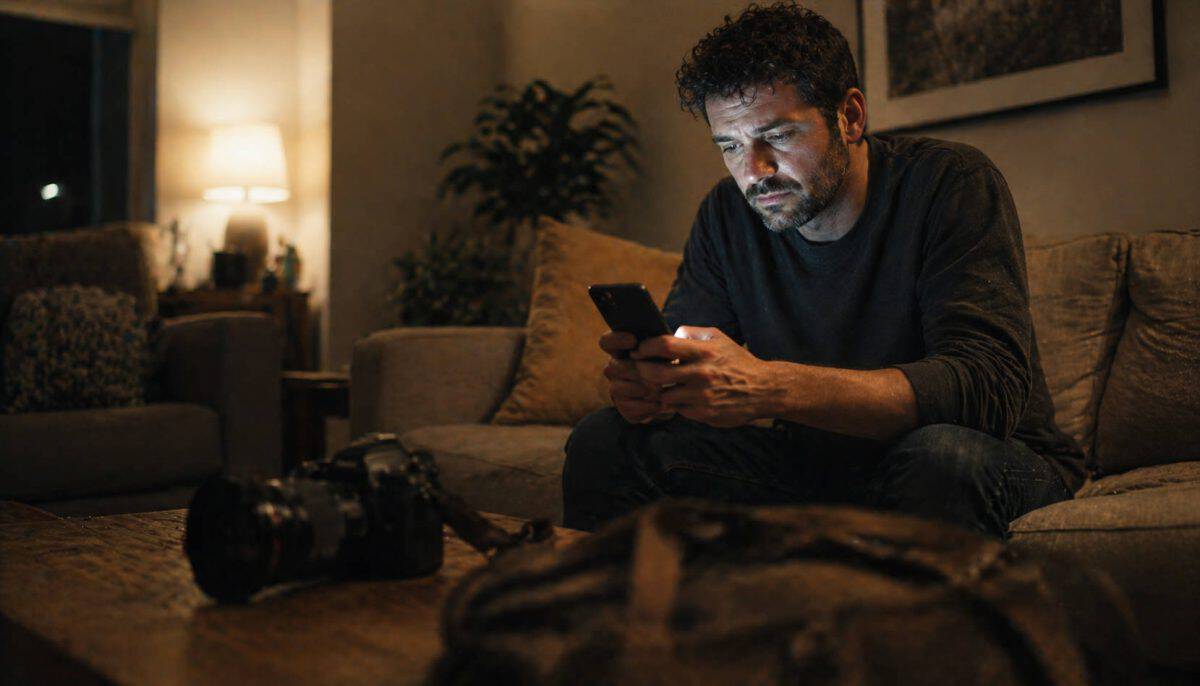
Imposter syndrome in photography has a very specific flavor, and it goes something like this: “I’ve been at this for two years, I’ve watched hundreds of hours of tutorials, I have good gear, and my photos still aren’t where I want them to be. Maybe I just don’t have what it takes.”
Sound familiar? What that internal voice leaves out is the fact that watching tutorials is not the same as practicing photography. Reading about baseball doesn’t make you a good hitter or fielder.
Photography is a physical, experiential skill that requires you to pick up the camera, make decisions under pressure, look at what went wrong, and try again. Knowledge without practice is just trivia.
The photographers who make it look effortless are not more talented than you. They have made more mistakes than you, and they kept going anyway. That’s the entire secret. The fact of the matter is that there is no shortcut between where you are and where you want to be, and imposter syndrome is what happens when you expect a shortcut to exist and then feel like a fraud when it doesn’t.
Failure Is Not the Problem — Avoiding It Is
“Don’t be afraid to suck!” has become something of a rallying cry for photographers who work with me, and I mean it in the most literal sense possible. Sucking at photography is a necessary stage of learning. Every photograph that doesn’t work is giving you information. Every bad exposure is telling you something about how you’re reading light. Every failed portrait is pointing you toward something you need to understand better.
The photographers who grow fastest are not the ones who take the fewest bad photos. They’re the ones who take the most photos overall and actually look at the results without judgment, asking “what happened here and why?” That’s problem-solving, and all good photography is the result of good problem-solving.
When you quit because your photos aren’t good enough yet, you’re quitting right in the middle of the most important part of the learning process. You’re walking out of the classroom during the lesson.
Reframe Before You Reload
Before we talk about specific action steps, there are four mindset shifts that must occur first. Without these, the action steps won’t stick.
Photography is not a competition. The moment you measure your photographs against someone else’s and decide what they say about your worth as a photographer, you’ve turned a passion into a performance. Your photographs don’t need to be better than anyone else’s. They need to be better than your last ones.
Consistency beats inspiration. Waiting to feel inspired is the most reliable way to never improve. The photographers who get better fast are the ones who go out and shoot even when they don’t feel like it, even when the light isn’t interesting, even when they have nothing particular to say. The camera is a muscle. If you don’t use it regularly, you lose the feel for it.
The process is the point. If you’re only shooting to get great images, you’re going to be frustrated most of the time, because great images don’t come from every session. But if you’re shooting to understand something — how a specific light behaves, how a wider aperture changes the feel of a portrait, how timing affects the energy of a street scene — then every session has value, regardless of what ends up on your memory card.
Mojo is curiosity, not confidence. This is probably the most important thing I can tell you. Most people think they’ve lost their mojo because they’ve lost confidence, and they believe they need to produce great work before their confidence comes back. That’s backward. Mojo doesn’t come from getting good results. It comes from being genuinely curious about what will happen when you try something. What happens if I shoot into the light instead of with it? What happens if I get closer? What happens if I slow the shutter down and let the motion blur? Confidence is a byproduct of curiosity that keeps moving forward despite results. The photographers who never lose their passion are not the ones who always get great shots — they’re the ones who are still genuinely interested in the problem they’re trying to solve. If you can reconnect with the curiosity, the mojo follows. That’s what you’re actually trying to get back.
Five Things to Do Right Now
If you’re ready to pick the camera back up, here’s where to start.
- Shoot with a single prime lens for 30 days. Pick one focal length, put it on the camera, and don’t change it. All that gear in your camera bag is a distraction when you’re trying to focus on the basics and rebuild confidence. Constraints force creativity, and creativity likely is what made you fall in love with photography in the first place.
- Unfollow anyone whose work makes you feel bad about yourself or your skills. This isn’t weakness, it’s curation. There’s a real difference between admiring someone’s images and feeling crushed by them. Better yet, ignore all the crap you find on social media and study the work of the masters. I am not saying that you should try to make your work look like theirs – they are referred to as masters for a reason, and their work and careers are well documented in ways that will help you build understanding.
- Go back to basics, literally. Pick one foundational concept you’re not completely sure you understand — how aperture affects depth of field, how to use a histogram, how to find the main light in any situation — and spend two weeks doing nothing but practicing that one thing. Build the foundation instead of adding more floors to a shaky structure.
- Shoot something with no intention of sharing it. Go out with the camera and take photographs purely for yourself, with zero plan to post them anywhere. The pressure to produce shareable content has ruined more photographers than bad gear ever has.
- Find one person to shoot with. Not a class, not a workshop — just one other person who shoots, at any level. Shoot together, look at each other’s images, and talk about what you were trying to do. Accountability and perspective are incredibly effective at breaking the isolation that makes quitting feel logical.
You Already Know This Is Worth It
You didn’t invest the money and time you put into photography by accident. Something about this craft genuinely moved you, and that doesn’t go away just because you hit a rough patch or a period of discouragement.
The photographers who stick with it are not the most naturally gifted ones. They’re the ones who decided at some point that the discomfort of not being good enough yet was preferable to the regret of walking away from something they loved. That camera in your closet isn’t a reminder of failure. It’s unfinished business. Go finish it.
Now go pick up that camera and shoot something! “Your BEST shot is your NEXT shot!”